Laser Welding Applications: Complete Guide to Process, Penetration & Safety (2026)
News 2026-07-09
Author: XFH LASER Engineering Team
Published: July 2026
Reading Time: 10–12 Minutes
Table of Contents
- What Is Laser Welding?
- How Does the Laser Welding Process Work?
- Types of Laser Welding Processes
- Understanding Laser Weld Penetration
- Factors That Affect Laser Weld Penetration
- Top Laser Welding Applications
- Best Materials for Laser Welding
- Advantages of Laser Welding
- Limitations of Laser Welding
- Laser Welding Safety Guidelines
- Common Welding Defects and Solutions
- Frequently Asked Questions
- Conclusion
Laser welding has become one of the most important joining technologies in modern manufacturing. Compared with conventional welding methods such as MIG and TIG, laser welding delivers faster production speeds, deeper weld penetration, lower heat input, and exceptional precision. These advantages make it the preferred solution for industries that demand consistent weld quality and high productivity.
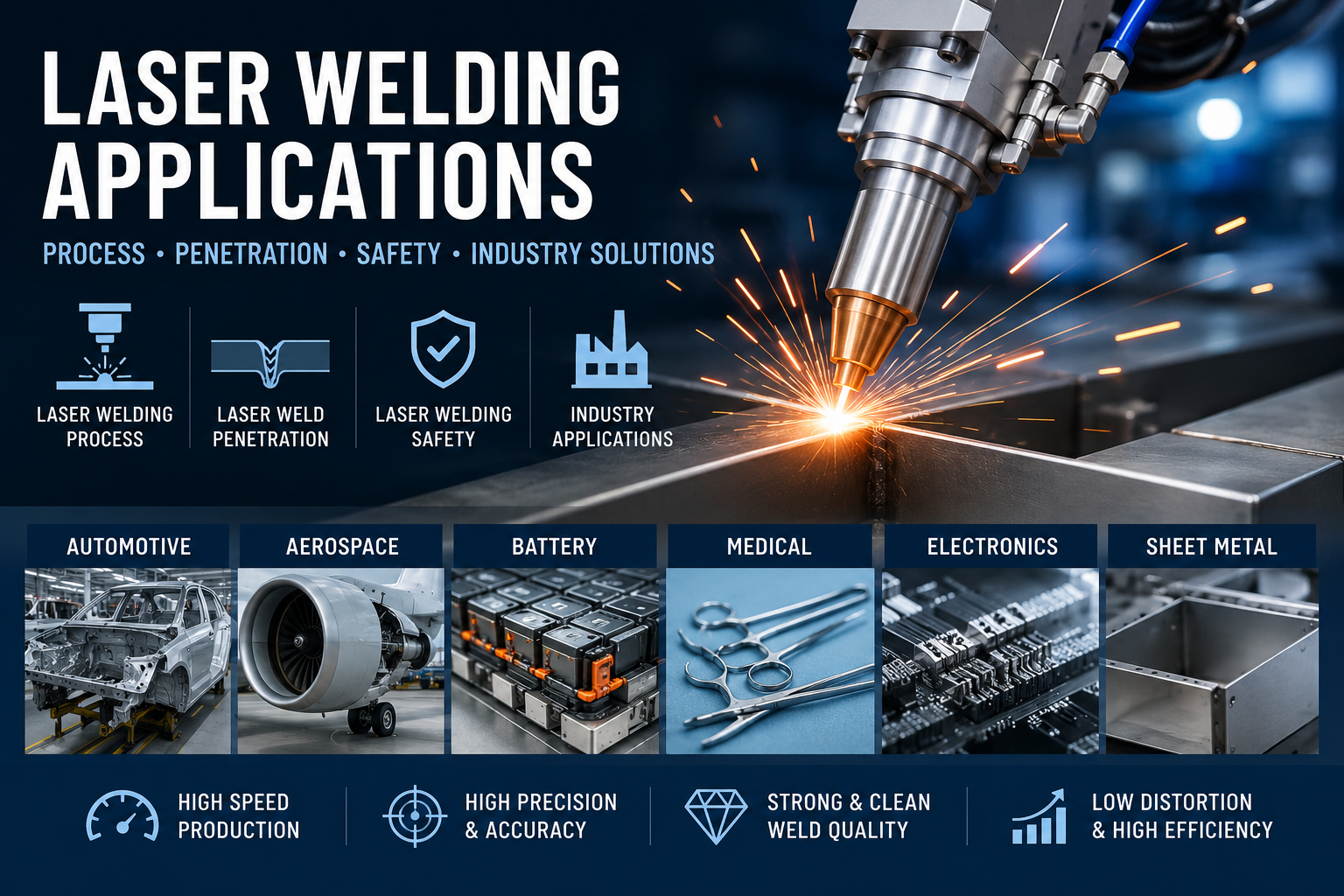
Today, laser welding applications can be found in automotive manufacturing, aerospace engineering, medical device production, consumer electronics, battery manufacturing, kitchen equipment, and sheet metal fabrication. As fiber laser technology continues to evolve, more companies are replacing traditional welding equipment with handheld and automated laser welding systems to reduce production costs while improving efficiency.
However, successful laser welding is not only about using advanced equipment. Manufacturers must also understand the complete laser welding process, know how to achieve proper laser weld penetration, and follow strict laser welding safety procedures to protect operators and ensure reliable production.
This guide explains everything you need to know—from how laser welding works to its most common industrial applications—helping you choose the right process and optimize welding performance.
What Is Laser Welding?
Laser welding is a fusion welding process that joins two or more metal components using a highly concentrated laser beam. The laser delivers a large amount of energy to a very small area, rapidly heating the material until it melts. As the molten pool cools, it forms a strong metallurgical bond between the workpieces.
Unlike traditional arc welding, laser welding does not rely on a physical electrode to generate heat. Instead, the focused laser beam produces precise, localized heating with minimal thermal distortion. This makes laser welding especially suitable for precision components and high-volume production.
Modern fiber laser welding systems are widely recognized for their excellent beam quality, energy efficiency, and low maintenance requirements. They can be integrated into robotic production lines or used as handheld systems for flexible fabrication tasks.
Key Characteristics of Laser Welding
- High energy density
- Narrow weld seams
- Small heat-affected zone (HAZ)
- Fast welding speeds
- Excellent repeatability
- Minimal post-processing
- Easy automation integration
These characteristics explain why laser welding applications continue to expand across nearly every manufacturing industry.
Laser Welding vs Traditional Welding
| Feature | Laser Welding | MIG/TIG Welding |
|---|---|---|
| Welding Speed | Very High | Medium |
| Precision | Excellent | Good |
| Heat Input | Low | High |
| Distortion | Minimal | Higher |
| Automation | Excellent | Moderate |
| Weld Appearance | Clean | Requires More Finishing |
| Productivity | High | Moderate |
For manufacturers focused on productivity and consistent quality, laser welding often delivers a lower total production cost despite the higher initial equipment investment.
How Does the Laser Welding Process Work?
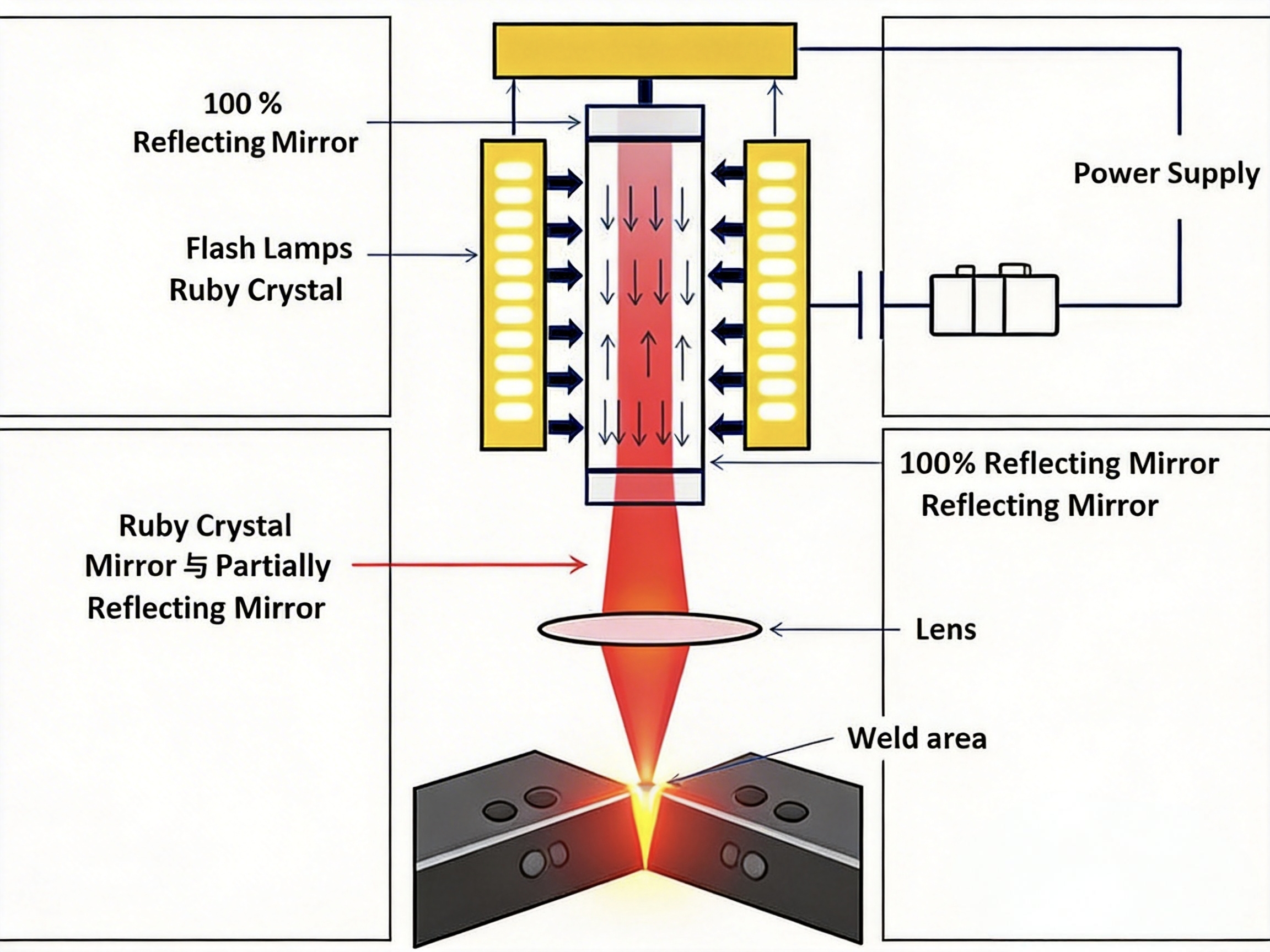
Understanding the laser welding process is essential for producing high-quality welds and maximizing equipment performance. Although different machines may vary in design, the overall process follows several common stages.
Step 1: Material Preparation
Before welding begins, the surfaces of the workpieces should be properly prepared.
Typical preparation includes:
- Removing oil and grease
- Cleaning rust or oxide layers
- Eliminating paint or coatings
- Ensuring proper joint fit-up
- Securing parts with fixtures
Surface contamination can lead to porosity, poor penetration, or unstable weld formation. Proper preparation is therefore one of the simplest ways to improve weld quality.
Step 2: Laser Beam Generation
The laser source generates a high-energy beam that is transmitted through optical fibers to the welding head.
Inside the welding head:
- Optical lenses focus the beam.
- The focal point concentrates the laser energy.
- Shielding gas protects the molten pool from oxidation.
Because the laser beam can be focused to an extremely small spot, the energy density becomes high enough to melt metal almost instantly.
Step 3: Formation of the Molten Pool
Once the focused laser strikes the workpiece, the material absorbs the laser energy and rapidly reaches its melting temperature.
Depending on the laser power and process settings, two different welding modes may occur:
Conduction Mode
The laser melts only the surface layer.
Characteristics include:
- Smooth appearance
- Shallow penetration
- Low distortion
- Suitable for thin materials
Keyhole Mode
At higher power densities, the metal vaporizes and forms a narrow cavity known as a keyhole. This allows the laser beam to penetrate deeper into the material.
Keyhole welding provides:
- Greater weld depth
- Higher joint strength
- Better efficiency for thicker metals
Most industrial laser welding applications involving structural components rely on keyhole welding because of its superior penetration capabilities.
Step 4: Solidification
As the laser beam moves forward, the molten metal cools rapidly and solidifies into a continuous weld seam.
Rapid cooling offers several benefits:
- Fine grain structure
- Strong mechanical properties
- Small heat-affected zone
- Reduced deformation
- Minimal discoloration
The cooling rate is one reason laser welding produces cleaner and stronger joints than many conventional welding methods.
Step 5: Inspection and Quality Control
After welding, manufacturers typically inspect the finished weld to ensure it meets quality requirements.
Common inspection methods include:
- Visual inspection
- Weld width measurement
- Penetration testing
- X-ray inspection
- Ultrasonic testing
- Tensile testing
- Metallographic analysis
Quality control is particularly important in industries such as aerospace, automotive, and medical manufacturing, where weld integrity directly affects product safety.
Key Parameters That Influence the Laser Welding Process
Several process parameters determine the final weld quality.
| Parameter | Effect on Welding |
|---|---|
| Laser Power | Determines melting capacity and penetration depth |
| Welding Speed | Influences bead shape and heat input |
| Focus Position | Controls energy concentration |
| Spot Size | Affects weld width and penetration |
| Shielding Gas | Reduces oxidation and improves appearance |
| Material Thickness | Determines required laser power |
| Joint Gap | Influences fusion quality |
Finding the right balance between these parameters is critical for producing consistent welds.
Why Process Optimization Matters
Even a high-quality laser welding machine cannot deliver optimal performance without proper parameter settings. Manufacturers often fine-tune laser power, travel speed, focal position, and shielding gas flow to match different materials and thicknesses.
Optimizing the laser welding process not only improves weld appearance but also increases laser weld penetration, reduces defects, minimizes material waste, and extends equipment lifespan.
As industries continue to demand faster production and higher quality, mastering the welding process has become just as important as selecting the right machine.
Types of Laser Welding Processes
Different manufacturing tasks require different welding methods. Selecting the appropriate laser welding process depends on factors such as material type, thickness, joint design, production volume, and required weld strength. Understanding these processes helps manufacturers maximize efficiency while achieving the desired laser weld penetration and weld quality.
1. Conduction Laser Welding
Conduction welding is used when appearance is more important than weld depth. The laser heats the surface of the material, and thermal conduction transfers heat into the joint without creating a keyhole.
Features
- Smooth and attractive weld surface
- Minimal spatter
- Very low distortion
- Small heat-affected zone
- Suitable for thin materials
Typical Applications
- Stainless steel decorative panels
- Consumer electronics
- Kitchen appliances
- Medical instruments
- Precision sheet metal parts
2. Keyhole Laser Welding
Keyhole welding is the most common process in industrial manufacturing. At high laser power density, the material vaporizes and forms a narrow cavity (the keyhole), allowing the laser beam to penetrate deeply into the workpiece.
Compared with conduction welding, keyhole welding provides significantly greater laser weld penetration and stronger joints.
Features
- Deep penetration
- High welding speed
- Excellent joint strength
- Suitable for medium and thick materials
- High productivity
Typical Applications
- Automotive frames
- Structural steel fabrication
- Heavy machinery
- Battery trays
- Pressure vessels
3. Laser Spot Welding
Laser spot welding joins materials at specific points rather than along a continuous seam. It offers exceptional precision while minimizing heat input.
Advantages
- Extremely accurate positioning
- Fast cycle times
- Minimal thermal deformation
- Ideal for delicate components
Typical Applications
- Battery tabs
- Sensors
- Electronic connectors
- Medical devices
- Precision hardware
4. Laser Seam Welding
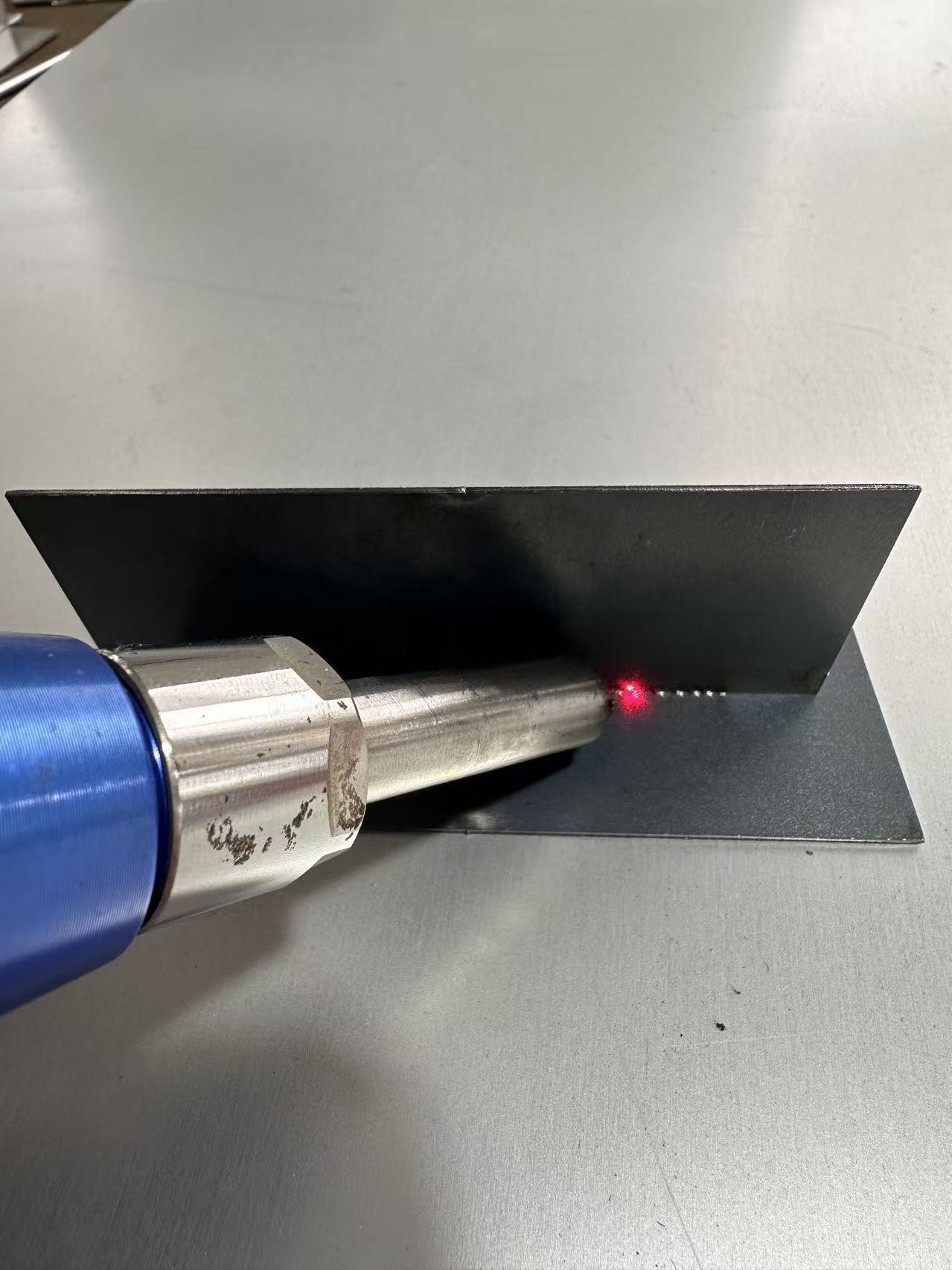
In seam welding, the laser produces a continuous weld bead along the entire joint. This process is ideal for products requiring airtight or watertight seals.
Applications
- Stainless steel tanks
- Water pipes
- Fuel tanks
- Heat exchangers
- Food processing equipment
5. Hybrid Laser Welding
Hybrid welding combines laser welding with traditional arc welding, such as MIG or TIG. The laser provides deep penetration, while the arc helps bridge larger joint gaps and improves filler metal deposition.
Benefits
- Increased penetration
- Better gap tolerance
- Higher deposition rate
- Improved productivity for thick materials
Hybrid laser welding is increasingly used in shipbuilding, bridge construction, and large structural components.
Understanding Laser Weld Penetration
One of the most important indicators of weld quality is laser weld penetration. Penetration refers to the depth that the weld fuses into the base material. Insufficient penetration can weaken the joint, while excessive penetration may cause burn-through or distortion.
Proper penetration ensures the welded parts can withstand mechanical loads, vibration, and long-term service.
Types of Weld Penetration
| Penetration Type | Characteristics | Typical Applications |
|---|---|---|
| Surface Fusion | Very shallow weld | Decorative products |
| Partial Penetration | Fusion through part of the material | General fabrication |
| Full Penetration | Complete fusion through material thickness | Structural components |
| Deep Keyhole Penetration | Maximum depth with narrow weld bead | Heavy-duty manufacturing |
For load-bearing structures, full penetration is generally preferred because it provides the highest joint strength.
Why Laser Weld Penetration Matters
Good penetration offers several advantages:
- Stronger weld joints
- Improved fatigue resistance
- Better sealing performance
- Reduced risk of weld failure
- Higher production consistency
In industries such as aerospace, automotive, and pressure vessel manufacturing, penetration quality is often verified through destructive testing or non-destructive inspection methods.
Factors That Affect Laser Weld Penetration
Achieving consistent laser weld penetration requires careful control of several process parameters. Even small adjustments can significantly influence weld quality.
Laser Power
Laser power directly determines how much energy reaches the material.
Generally:
- Higher power increases penetration depth.
- Lower power produces shallower welds.
However, excessive power may lead to excessive spatter, burn-through, or wider heat-affected zones.
Welding Speed
Travel speed determines how long the laser remains over a specific area.
- Faster speeds reduce heat input and penetration.
- Slower speeds increase penetration but may cause overheating.
Finding the optimal balance is essential for stable production.
Focus Position
The focal point controls where the laser energy is concentrated.
Correct focus provides:
- Maximum energy density
- Stable keyhole formation
- Uniform penetration
An incorrect focal position may result in unstable welding or insufficient fusion.
Spot Size
A smaller spot concentrates more energy into a smaller area, producing deeper penetration.
A larger spot creates:
- Wider weld beads
- Lower penetration
- Better surface appearance for thin materials
Material Thickness
Thicker materials naturally require:
- Higher laser power
- Slower welding speeds
- Better heat control
For example:
| Material Thickness | Recommended Laser Power |
|---|---|
| 0.4–3 mm | 700–1200 W |
| 0.4–4 mm | 1200–1500 W |
| 0.4–6 mm | 2000 W |
| 0.4–8 mm | 3000 W |
Actual parameters may vary depending on material type and joint design.
Material Properties
Different metals absorb laser energy differently.
Stainless Steel
- Excellent laser absorption
- Stable welding process
- Deep penetration
Carbon Steel
- Easy to weld
- Strong joints
- High productivity
Aluminum
- High thermal conductivity
- High reflectivity
- Requires optimized parameters and shielding gas
Copper
- Very reflective
- Dissipates heat rapidly
- Requires higher laser power and precise focus
Understanding material characteristics is essential for selecting the correct welding parameters.
Shielding Gas
Shielding gas protects the molten pool from oxidation while influencing penetration and weld appearance.
Common choices include:
- Argon: Excellent protection and clean welds.
- Nitrogen: Suitable for stainless steel applications.
- Helium: Produces deeper penetration but at a higher operating cost.
Proper gas flow also helps reduce porosity and improve surface finish.
Top Laser Welding Applications
The versatility of laser technology has led to rapid growth in laser welding applications across numerous industries. From mass production to precision manufacturing, laser welding improves efficiency, consistency, and product quality.
Automotive Manufacturing
The automotive industry is one of the largest users of laser welding technology. Manufacturers rely on automated laser systems to produce lightweight, high-strength vehicles while maintaining fast production speeds.
Common applications include:
- Body-in-white assembly
- Door frames
- Roof panels
- Exhaust systems
- Transmission components
- Seat structures
- Electric vehicle battery trays
Laser welding reduces distortion while increasing production efficiency, making it ideal for modern automotive assembly lines.
Battery Manufacturing
As electric vehicles and energy storage systems continue to grow, battery production has become one of the fastest-expanding laser welding applications.
Laser welding is widely used for:
- Battery tabs
- Busbars
- Cell connections
- Battery modules
- Battery packs
Its precise heat control minimizes damage to sensitive battery components while ensuring reliable electrical connections.
Electronics Manufacturing
Electronic products require extremely accurate welding with minimal heat input.
Typical applications include:
- Sensor housings
- Connectors
- Mobile device components
- Consumer electronics
- Precision electrical assemblies
Laser welding produces clean, repeatable welds without affecting nearby delicate components.
Medical Devices
Medical manufacturers demand high precision, cleanliness, and repeatability. Laser welding is ideal because it creates narrow, contamination-free welds with excellent dimensional control.
Common products include:
- Surgical instruments
- Stainless steel medical tools
- Implantable devices
- Diagnostic equipment
- Medical tubing
The minimal heat-affected zone helps preserve the material properties required for critical healthcare applications.
Aerospace Industry
The aerospace industry demands exceptional weld quality, lightweight structures, and strict quality control. Laser welding provides precise heat input and excellent repeatability, making it ideal for manufacturing high-performance aircraft components.
Common aerospace applications include:
- Aircraft structural components
- Titanium alloy parts
- Engine components
- Fuel system assemblies
- Sensor housings
- Satellite components
Because aerospace parts often use expensive materials such as titanium and nickel alloys, the low heat input of laser welding helps minimize distortion and reduce material waste.
Sheet Metal Fabrication
Sheet metal fabrication is another major area where laser welding applications continue to expand. Compared with traditional TIG welding, handheld laser welding machines significantly increase productivity while reducing finishing work.
Typical products include:
- Electrical cabinets
- Distribution boxes
- Metal enclosures
- HVAC equipment
- Stainless steel cabinets
- Industrial machinery covers
Manufacturers also benefit from cleaner weld seams, lower labor costs, and shorter production cycles.
Kitchen Equipment Manufacturing
Commercial kitchens and food-processing equipment require smooth, hygienic welds that are easy to clean and resistant to corrosion.
Laser welding is commonly used for:
- Stainless steel sinks
- Worktables
- Cabinets
- Food-processing equipment
- Commercial ovens
- Storage racks
Because the process produces narrow weld seams with minimal discoloration, manufacturers spend less time on polishing and surface finishing.
Mold Repair and Tooling
Laser welding has become a preferred solution for repairing high-value molds instead of replacing them.
Applications include:
- Injection molds
- Die casting molds
- Stamping dies
- Precision tooling
- Worn machine parts
The localized heat input allows technicians to repair damaged areas without affecting the surrounding material, extending tool life and reducing maintenance costs.
Best Materials for Laser Welding
Laser welding is compatible with a wide range of metals, although different materials require different welding parameters.
| Material | Weldability | Common Applications |
|---|---|---|
| Stainless Steel | Excellent | Food equipment, medical devices, sheet metal |
| Carbon Steel | Excellent | Structural fabrication, machinery |
| Aluminum | Good | Automotive, aerospace, EV batteries |
| Copper | Moderate | Electrical components, busbars |
| Titanium | Excellent | Aerospace, medical implants |
| Nickel Alloys | Excellent | High-temperature industrial equipment |
Among these materials, stainless steel remains the most commonly welded due to its excellent laser absorption, corrosion resistance, and stable welding performance.
Advantages of Laser Welding
The popularity of laser welding applications is driven by several significant advantages over conventional welding methods.
High Productivity
Laser welding can operate several times faster than TIG welding, making it ideal for large-scale production.
Deep Laser Weld Penetration
High energy density enables deep, narrow welds while maintaining excellent joint strength.
Minimal Heat-Affected Zone
Localized heating reduces thermal distortion and protects surrounding materials.
Excellent Weld Appearance
Laser welds are smooth, clean, and often require little or no post-processing.
Easy Automation
Laser welding systems integrate seamlessly with robots, CNC equipment, and automated production lines.
Lower Overall Manufacturing Costs
Although the initial investment is higher, increased efficiency, lower labor costs, and reduced material waste often result in a lower total cost of ownership.
Limitations of Laser Welding
Despite its many benefits, laser welding also has some limitations.
- Higher initial equipment cost than conventional welding machines.
- Precise joint fit-up is required for optimal results.
- Highly reflective materials such as copper and aluminum may require specialized process settings.
- Operators need proper training to optimize parameters.
- Regular maintenance of optical components and cooling systems is necessary.
Understanding these limitations helps manufacturers choose the right solution for their production needs.
Laser Welding Safety
Following proper laser welding safety procedures is essential for protecting operators and maintaining a safe working environment. Because industrial laser systems generate high-energy beams, improper operation can lead to serious injuries.
Wear Appropriate Personal Protective Equipment (PPE)
Operators should always use:
- Certified laser safety glasses matched to the laser wavelength
- Protective gloves
- Flame-resistant clothing
- Safety shoes
Eye protection is especially important because reflected laser beams can cause permanent vision damage.
Use Effective Fume Extraction
Laser welding generates metal fumes and fine particles during the melting process.
A proper fume extraction system helps:
- Improve air quality
- Reduce health risks
- Maintain a cleaner work environment
Prevent Laser Exposure
The work area should include:
- Protective enclosures
- Laser safety curtains
- Warning signs
- Controlled access during operation
These measures reduce the risk of accidental exposure to the laser beam.
Inspect Equipment Regularly
Routine maintenance should include checking:
- Protective lenses
- Laser nozzle
- Cooling system
- Fiber optic cable
- Gas supply
- Emergency stop functions
Preventive maintenance improves welding quality while reducing unexpected downtime.
Train Operators
Every operator should understand:
- Machine startup and shutdown procedures
- Emergency response protocols
- Parameter adjustment
- Routine maintenance
- Safe operating practices
Well-trained personnel are essential for both productivity and laser welding safety.
Common Laser Welding Defects and Solutions
| Defect | Possible Cause | Recommended Solution |
|---|---|---|
| Porosity | Surface contamination | Clean the material before welding |
| Lack of Penetration | Low laser power or excessive speed | Increase power or reduce travel speed |
| Burn-Through | Excessive heat input | Lower power or increase welding speed |
| Cracks | Improper cooling or material stress | Optimize parameters and joint design |
| Excessive Spatter | Incorrect focus position | Adjust focal point and laser settings |
Regular process optimization can significantly reduce these defects and improve overall production quality.
Frequently Asked Questions
What are the most common laser welding applications?
Laser welding is widely used in automotive manufacturing, battery production, aerospace, medical devices, electronics, sheet metal fabrication, kitchen equipment, and mold repair.
How deep can laser weld penetration reach?
Penetration depth depends on factors such as laser power, material type, welding speed, and joint design. Modern handheld fiber laser welding machines can typically achieve full penetration on carbon steel and stainless steel up to several millimeters thick when properly configured.
Is laser welding stronger than TIG welding?
When properly optimized, laser welding can produce welds with excellent strength, deep penetration, and minimal distortion. For many industrial applications, it offers comparable or superior performance while significantly increasing productivity.
Which materials are best suited for laser welding?
Stainless steel, carbon steel, titanium, and nickel alloys offer excellent weldability. Aluminum and copper can also be welded successfully with appropriate process parameters.
Why is laser welding becoming more popular?
Manufacturers increasingly adopt laser welding because it provides higher production efficiency, improved weld consistency, easier automation, lower post-processing requirements, and reduced long-term manufacturing costs.
Conclusion
Laser welding has transformed modern manufacturing by combining speed, precision, and efficiency in a single process. From automotive production and aerospace engineering to battery manufacturing and sheet metal fabrication, laser welding applications continue to expand as industries pursue higher quality and greater productivity.
Achieving excellent results depends on more than simply choosing the right machine. Manufacturers must understand the laser welding process, optimize laser weld penetration, and implement comprehensive laser welding safety practices. Together, these factors ensure strong, reliable welds while minimizing defects, reducing downtime, and improving overall production efficiency.
As fiber laser technology continues to evolve, laser welding will play an even greater role in the future of smart manufacturing, helping businesses produce higher-quality products with lower operating costs.
Ready to Upgrade Your Welding Production?
Whether you’re producing stainless steel cabinets, EV battery packs, precision medical devices, or heavy industrial equipment, choosing the right laser welding system is the key to improving efficiency and weld quality.
XFH LASER offers a complete range of handheld and automated fiber laser welding machines with power options from 700W to 3000W, supporting a wide variety of materials and industrial applications. Contact our engineering team to find the best solution for your production needs.