Portable Laser Welding Machine: Complete Buying Guide for Metal Fabrication
News 2026-08-28
Table of Contents
- What Is a Portable Laser Welding Machine?
- How Does a Portable Laser Welding Machine Work?
- Key Benefits of Portable Laser Welding
- Portable Laser Welding vs. MIG and TIG Welding
- What Materials Can a Portable Laser Welder Weld?
- Portable Laser Welding Machine Power: 1000W vs. 1500W vs. 2000W
- What Thickness Can a Portable Laser Welder Weld?
- Applications of Portable Laser Welding Machines
- Portable Laser Welding Machine with Cleaning Function
- How to Choose the Right Portable Laser Welding Machine
- Air-Cooled vs. Water-Cooled Portable Laser Welders
- Important Portable Laser Welding Parameters
- Common Portable Laser Welding Problems
- Portable Laser Welding Machine Safety
- Portable Laser Welding Machine Price
- Is a Portable Laser Welder Worth the Investment?
- Portable Laser Welding Machine Buying Checklist
- Frequently Asked Questions
- Conclusion
1. What Is a Portable Laser Welding Machine?
A portable laser welding machine is a compact laser welding system designed to join metal components using a concentrated laser beam. Unlike traditional welding equipment, a portable laser welder delivers highly concentrated energy into a small area, allowing manufacturers to create precise welds with relatively low heat input.
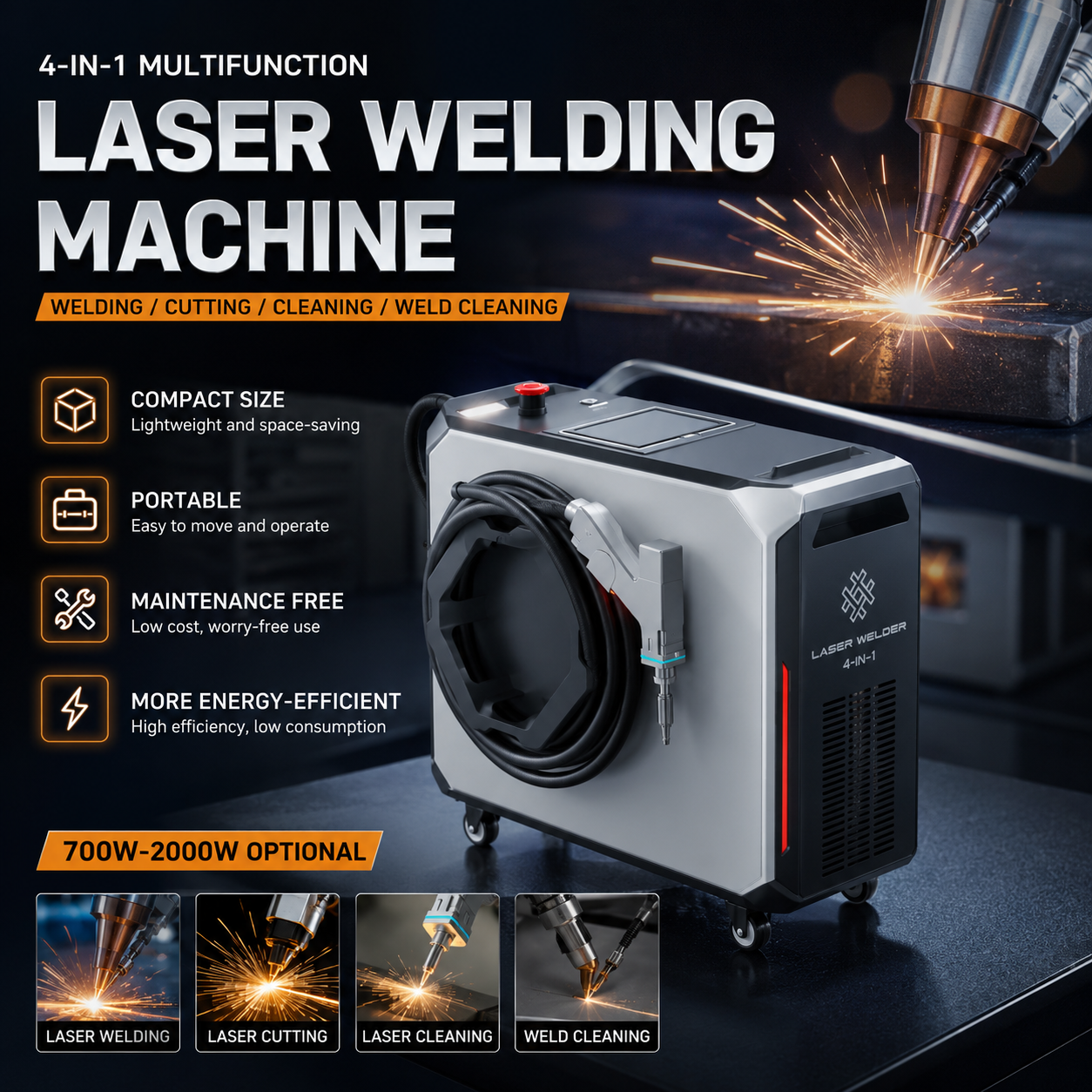
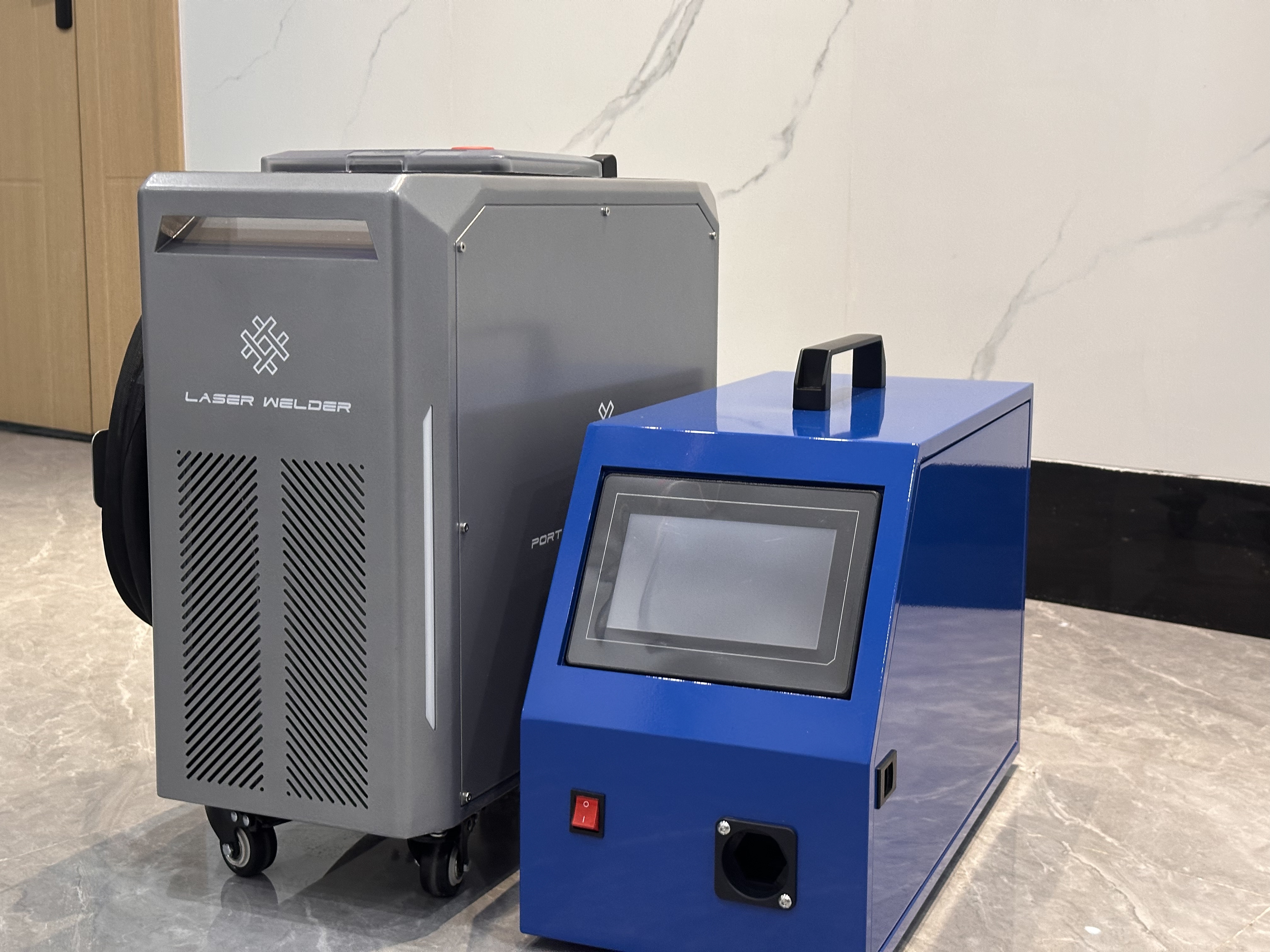
A typical portable laser welding system consists of several key components, including a laser source, handheld welding gun, control system, cooling system, shielding gas system, and optional wire feeder.
The handheld welding gun gives operators greater flexibility when working with different workpiece shapes and positions. This makes portable laser welding particularly useful for sheet metal fabrication, stainless steel products, machinery manufacturing, metal furniture, kitchen equipment, automotive components, and general metal fabrication.
Modern handheld laser welding systems are also designed to reduce the learning curve compared with some conventional welding processes. Manufacturers increasingly emphasize ease of operation, productivity, and reduced pre- and post-weld processing as major advantages of handheld laser welding.
The term “portable” does not necessarily mean that the machine is designed for every outdoor environment. Instead, it generally refers to a compact and movable laser welding system that can be easily positioned around a workshop or production area.
2. How Does a Portable Laser Welding Machine Work?
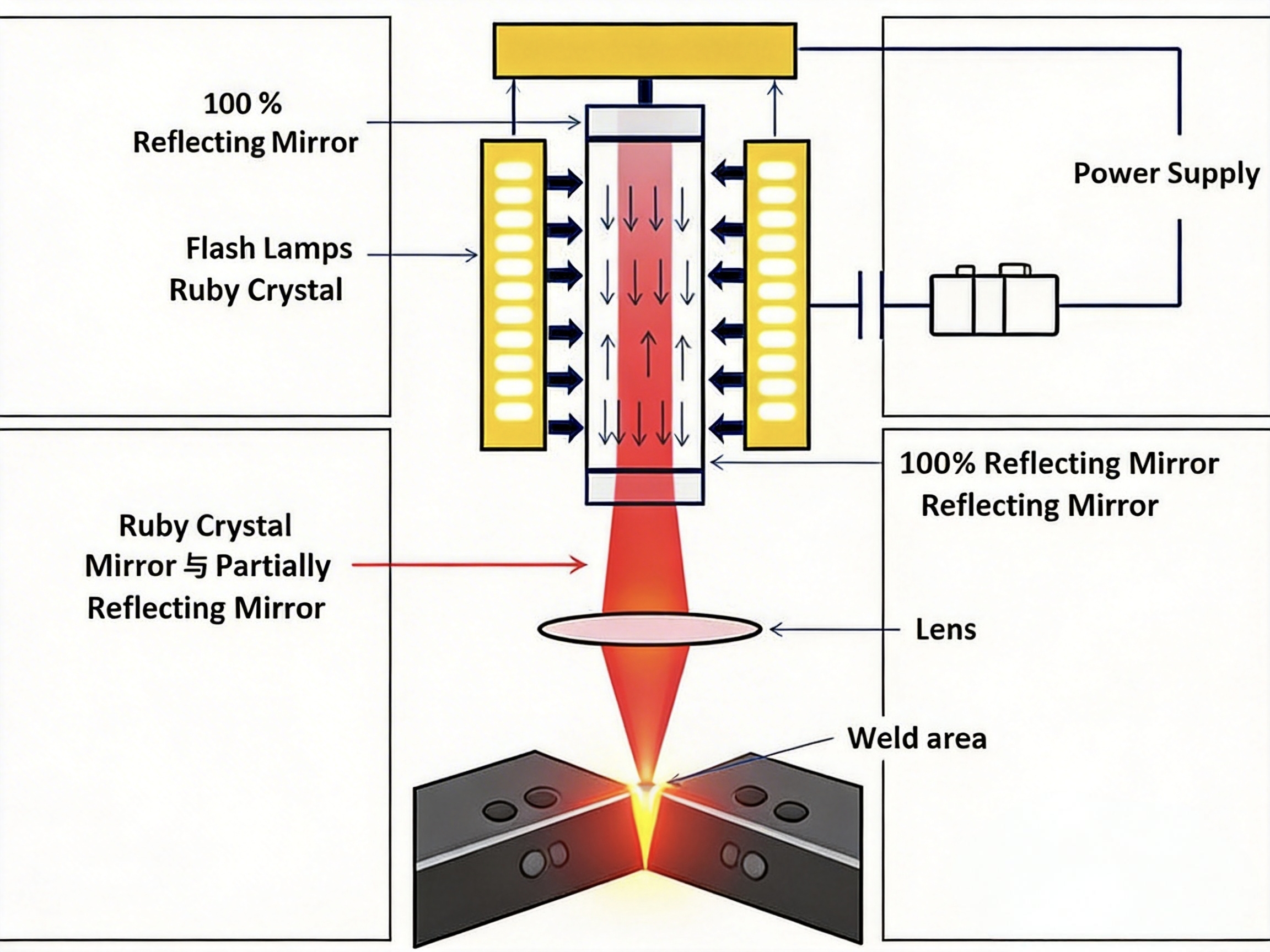
The basic principle of laser welding is relatively simple.
A laser source generates a high-energy laser beam. The beam is transmitted through the optical system and focused by the welding gun onto the joint between two metal components.
When the laser energy reaches a sufficiently high intensity, it melts the material in a small localized area. As the welding gun moves along the joint, the molten material cools and solidifies, forming a weld.
A typical process can be summarized as:
Laser Source → Optical Transmission → Focusing → Melting → Solidification → Weld Formation
The welding gun may also use a wobble or oscillating laser beam. By moving the laser beam across a controlled width, the operator can create a wider weld seam and accommodate different joint configurations.
Depending on the application, filler wire can also be introduced into the weld pool.
Shielding gas, such as argon or nitrogen, is commonly used to protect the molten metal from atmospheric contamination.
The final welding result depends on multiple factors, including:
- Laser power
- Welding speed
- Material type
- Material thickness
- Focus position
- Beam oscillation width
- Wire feeding speed
- Shielding gas
- Joint design
- Operator technique
This is why selecting a portable laser welding machine should never be based only on its wattage.
3. Key Benefits of Portable Laser Welding
3.1 Faster Welding
One of the main reasons manufacturers consider a portable laser welder is productivity.
Laser welding can achieve high welding speeds because the laser concentrates energy into a small area. For suitable applications, this can significantly reduce processing time compared with slower welding processes.
However, actual welding speed depends on material, thickness, joint design, laser power, and required weld quality.
The goal should not simply be to weld as fast as possible.
The goal is to achieve the required weld quality while maximizing production efficiency.
3.2 Lower Heat Input
Traditional welding processes can introduce a significant amount of heat into the workpiece.
Excessive heat can cause:
- Warping
- Distortion
- Discoloration
- Large heat-affected zones
- Dimensional changes
Laser welding concentrates energy into a much smaller area.
This allows manufacturers to control heat input more effectively and can reduce thermal deformation, especially when welding thin sheet metal.
For manufacturers producing stainless steel cabinets, metal furniture, decorative panels, electrical enclosures, and other thin-sheet products, this can be a major advantage.
3.3 Less Grinding and Post-Weld Processing
A major hidden cost in welding is often not the welding itself.
It is what happens afterward.
A traditional workflow may look like:
Welding → Spatter Removal → Grinding → Polishing → Cleaning → Inspection
A properly configured laser welding process can reduce spatter and improve weld appearance, potentially reducing the amount of grinding and finishing required.
Modern handheld laser systems increasingly focus on minimizing pre- and post-weld processing, helping operators spend more time welding rather than grinding or correcting distortion.
For high-volume fabrication shops, reducing post-processing can have a major impact on labor costs.
3.4 Excellent Weld Appearance
A portable laser welding machine for metal can produce narrow and precise weld seams when the correct parameters are used.
This is particularly valuable for products where appearance matters.
Examples include:
- Stainless steel furniture
- Kitchen equipment
- Decorative metal products
- Advertising signs
- Metal doors
- Electrical cabinets
- Automotive components
In these applications, reducing visible weld defects can reduce the amount of finishing work required.
3.5 Easier Operation
Compared with some traditional welding processes, handheld laser welding can have a shorter learning curve.
The operator mainly needs to understand:
- Material selection
- Laser power
- Welding speed
- Beam width
- Focus position
- Shielding gas
- Wire feeding
- Welding technique
This does not mean that laser welding requires no training.
Proper operator training is still essential for both welding quality and laser safety.
3.6 Flexible Production
A portable laser welder can be moved between workstations more easily than large automated welding systems.
This makes it suitable for:
- Small workshops
- Medium-sized factories
- Job shops
- Maintenance departments
- Custom fabrication
- Repair applications
- Low-to-medium production volumes
4. Portable Laser Welding vs. MIG and TIG Welding
A common question is whether laser welding is better than MIG or TIG welding.
The answer depends on the application.
| Feature | Portable Laser Welding | MIG Welding | TIG Welding |
|---|---|---|---|
| Welding Speed | High | Medium | Low to Medium |
| Learning Curve | Relatively Short | Medium | Longer |
| Heat Input | Low | Medium | Medium |
| Distortion | Low when properly applied | Medium | Medium |
| Weld Appearance | Excellent | Good | Excellent |
| Post-Weld Grinding | Often Reduced | Often Required | Usually Low |
| Thin Sheet Applications | Excellent | Good | Excellent |
| Production Efficiency | High | Medium to High | Low to Medium |
| Flexibility | High | High | High |
Portable laser welding should not be viewed as a universal replacement for every welding process.
For applications requiring extremely large gaps, very thick materials, heavy structural welding, or specific traditional welding procedures, MIG, TIG, or other processes may still be more appropriate.
The strongest use cases for portable laser welding are applications where speed, appearance, low heat input, precision, and reduced post-processing are important.
5. What Materials Can a Portable Laser Welder Weld?
One of the most important considerations when choosing a portable laser welding machine is the material you need to weld.
5.1 Stainless Steel
Stainless steel is one of the most common applications for handheld laser welding.
Typical applications include:
- Kitchen equipment
- Stainless steel cabinets
- Metal furniture
- Food-processing equipment
- Decorative products
- Medical equipment
- Electrical enclosures
Laser welding can provide clean and attractive weld seams with relatively low thermal distortion.
5.2 Carbon Steel
A portable laser welder can also be used for carbon steel and mild steel fabrication.
Common applications include:
- Machinery frames
- Sheet metal components
- Steel cabinets
- Structural components
- Agricultural equipment
- Metal furniture
The appropriate laser power should be selected according to the material thickness and joint configuration.
5.3 Aluminum
Aluminum presents different challenges because of its thermal characteristics and reflectivity.
A properly configured portable laser welder for aluminum can be useful for:
- Aluminum frames
- Automotive components
- Machinery parts
- Lightweight structures
- Fabricated aluminum products
Parameters should be tested carefully before production.
5.4 Copper
Copper is highly reflective and has high thermal conductivity.
As a result, copper welding may require higher energy density and carefully selected laser parameters.
A suitable laser source and configuration are important when working with copper.
5.5 Titanium
Titanium welding is used in specialized industries such as aerospace, medical equipment, and high-performance manufacturing.
Because titanium is sensitive to contamination during welding, shielding gas and process control are particularly important.
6. Portable Laser Welding Machine Power: 1000W vs. 1500W vs. 2000W
Laser power is one of the most important specifications when purchasing a portable laser welding machine.
However, higher wattage does not automatically mean a better machine.
6.1 1000W Portable Laser Welder
A 1000W system may be suitable for:
- Thin sheet metal
- Stainless steel
- Light fabrication
- Small workshops
- Repair applications
It can be a practical option for users who primarily work with thinner materials.
6.2 1500W Portable Laser Welder
A 1500W portable laser welder is often considered a versatile option for general metal fabrication.
Potential applications include:
- Stainless steel
- Carbon steel
- Aluminum
- Sheet metal
- Machinery components
- Metal furniture
It provides a balance between power, versatility, and operating cost.
6.3 2000W Portable Laser Welder
A 2000W portable laser welder is generally more suitable for users who need greater welding capability and higher production efficiency.
Typical applications include:
- Thicker sheet metal
- Aluminum fabrication
- Machinery manufacturing
- Structural components
- Higher-volume production
Commercial handheld systems commonly offer different power classes for different material thickness ranges, reinforcing the importance of matching laser power to the intended application rather than simply choosing the highest available power.
7. What Thickness Can a Portable Laser Welder Weld?
There is no universal maximum welding thickness for every portable laser welding machine.
The actual welding thickness depends on:
- Laser power
- Material
- Material thickness
- Joint configuration
- Welding speed
- Focus position
- Shielding gas
- Wire feeding
- Operator technique
For example, a 1500W machine may produce excellent results on one material but require different parameters for another material of the same thickness.
Therefore, manufacturers should avoid choosing a machine based on a simple statement such as “2000W equals X mm.”
A better approach is to conduct a real welding test using your actual material and joint design.
This is especially important for:
- Aluminum
- Copper
- Highly reflective materials
- Thick plates
- Dissimilar metals
8. Applications of Portable Laser Welding Machines
The flexibility of a portable laser welder for metal makes it suitable for a wide range of industries.
Sheet Metal Fabrication
Portable laser welding is widely suited to sheet metal products where low distortion and good appearance are important.
Stainless Steel Fabrication
It can be used for cabinets, furniture, kitchen equipment, decorative products, and other stainless steel components.
Metal Furniture
Laser welding can help manufacturers produce clean-looking joints while reducing finishing work.
Electrical Cabinets
Low distortion and clean welds are valuable when producing electrical enclosures and control cabinets.
HVAC
Portable laser welding can be used for selected sheet metal components and fabricated HVAC products.
Automotive Components
Applications may include brackets, panels, frames, and other fabricated metal parts.
Machinery Manufacturing
Laser welding can be used for machinery housings, components, frames, and custom fabricated parts.
Advertising and Signage
The process can be useful for stainless steel, aluminum, and other decorative metal products.
Maintenance and Repair
Because the equipment can be moved around a workshop, a portable laser welder can also be useful for selected repair and maintenance applications.
9. Portable Laser Welding Machine with Cleaning Function
Some modern systems combine laser welding with laser cleaning functions.
This can create a more complete metal fabrication workflow.
Pre-Weld Cleaning
Laser cleaning can remove:
- Rust
- Oil
- Grease
- Oxide
- Paint
- Surface contamination
Cleaning the joint before welding can improve process consistency.
Welding
The same equipment can then be used for the welding operation.
Post-Weld Cleaning
Laser cleaning may also be used for selected post-weld applications, including removing discoloration or surface residue.
This type of multifunction equipment can be especially attractive for workshops that want to reduce the number of separate machines required for fabrication.
However, users should evaluate whether they actually need cleaning functionality before paying for additional features.
10. How to Choose the Right Portable Laser Welding Machine
Choosing the right machine starts with your application.
Step 1: Identify Your Materials
List the metals you work with most frequently.
For example:
- Stainless steel
- Carbon steel
- Aluminum
- Copper
- Titanium
Step 2: Identify Your Maximum Thickness
Determine the thickest material you regularly weld.
Do not choose a machine based only on your average thickness.
Consider your maximum production requirement.
Step 3: Determine Your Production Volume
Ask yourself:
How many hours will the machine operate every day?
Occasional users may prioritize portability and price.
Production factories may prioritize:
- Welding speed
- Cooling capacity
- Reliability
- Ergonomics
- Continuous operation
- After-sales service
Step 4: Choose the Laser Power
As a general starting point:
1000W → Thin and light fabrication
1500W → General-purpose fabrication
2000W → Higher production and thicker applications
These are only starting points. Actual machine selection should always be based on welding tests.
Step 5: Decide Whether You Need Wire Feeding
Some joints can be welded without filler wire.
Others require wire feeding to achieve the required joint strength, gap filling, or weld appearance.
If your workpieces frequently have larger joint gaps, wire feeding can be an important feature.
Step 6: Consider Cooling
Cooling systems influence:
- Machine size
- Weight
- Continuous operating capability
- Maintenance
- Portability
For light-duty applications, a compact air-cooled design may be attractive.
For higher-power or longer-duration production, water-cooled systems may provide greater thermal management.
Step 7: Consider Additional Functions
Some users may benefit from:
- Laser cleaning
- Weld seam cleaning
- Cutting
- Multiple process modes
However, additional functions should be selected based on actual production requirements.
11. Air-Cooled vs. Water-Cooled Portable Laser Welders
Cooling is an important consideration when choosing a portable laser welding machine.
Air-Cooled Laser Welder
Advantages may include:
- Compact design
- Lower weight
- Easier transportation
- No external water circulation system
- Convenient setup
Air-cooled machines can be attractive for mobile and light-to-medium duty applications.
Water-Cooled Laser Welder
Advantages may include:
- Stronger cooling capacity
- Better thermal management for higher-power operation
- Suitable for longer continuous production
The right choice depends on power, operating hours, environment, and production requirements.
The goal should be to choose the cooling system based on actual workload rather than simply choosing the smallest or largest system.
12. Important Portable Laser Welding Parameters
Correct parameters are essential for producing consistent welds.
Laser Power
Controls the amount of energy delivered to the workpiece.
Welding Speed
Controls how quickly the laser travels along the joint.
Higher speed generally reduces heat input, while lower speed increases energy delivered to a specific area.
Wobble Width
Controls the width of the laser scanning pattern.
A wider wobble can create a wider weld seam, while a narrower pattern concentrates energy more tightly.
Wire Feeding Speed
When filler wire is used, wire feeding speed must be matched with laser power and welding speed.
Wire Diameter
Common wire diameters vary depending on the application and joint requirements.
Shielding Gas
Shielding gas protects the molten weld pool from atmospheric contamination.
Focus Position
The position of the laser focus can significantly affect energy density and penetration.
Material Thickness
Parameters must always be adjusted according to the actual thickness and material.
There is no universal parameter setting that works perfectly for every application.
13. Common Portable Laser Welding Problems
Even a high-quality portable laser welder can produce poor results if the parameters are incorrect.
Problem 1: Shallow Penetration
Possible causes include:
- Insufficient laser power
- Excessive welding speed
- Incorrect focus
- Poor joint preparation
Problem 2: Burn-Through
Possible causes include:
- Excessive power
- Welding speed too low
- Excessive heat input
- Material too thin
Problem 3: Excessive Spatter
Possible causes include:
- Incorrect power
- Incorrect focus
- Improper gas flow
- Contaminated material
- Incorrect wire feeding
Problem 4: Weld Discoloration
Possible causes include:
- Insufficient shielding gas
- Incorrect gas flow
- Surface contamination
- Excessive heat input
Problem 5: Porosity
Possible causes include:
- Contaminated material
- Moisture
- Poor shielding
- Incorrect welding parameters
The correct response is not always to increase laser power.
Parameter optimization should consider the entire welding process.
14. Portable Laser Welding Machine Safety
A portable laser welding machine is convenient, but portability does not mean that it is risk-free.
Laser welding involves high-energy laser radiation and requires appropriate safety controls.
Important safety measures include:
Laser Safety Area
The welding area should be appropriately controlled to prevent unauthorized exposure.
Protective Equipment
Operators should use appropriate laser-rated protective equipment according to the laser system and applicable safety requirements.
Protective Enclosure
For certain applications, a laser safety enclosure or controlled welding booth may be necessary.
Interlock System
Appropriate interlocks can help prevent laser emission when safety conditions are not met.
Emergency Stop
The machine should have an accessible emergency stop system.
Fume Extraction
Metal welding can generate fumes and particles. Appropriate ventilation or fume extraction should be provided.
Operator Training
Operators should understand:
- Laser hazards
- Machine operation
- Emergency procedures
- Welding parameters
- Protective equipment
- Workplace safety requirements
Modern handheld laser systems commonly provide dedicated safety procedures and operator training because high-power laser welding requires additional safety controls compared with conventional welding.
15. Portable Laser Welding Machine Price
The portable laser welding machine price can vary significantly depending on the configuration.
The main factors affecting price include:
Laser Power
Higher-power systems generally require more expensive laser sources and supporting components.
Laser Source
The laser source is one of the most important components of the machine and can have a significant impact on overall cost.
Cooling System
Air-cooled and water-cooled systems have different costs and performance characteristics.
Welding Gun
The quality and functionality of the handheld welding gun can affect the overall price.
Wire Feeder
A professional wire feeding system adds functionality and cost.
Cleaning Function
A multifunction laser welding machine with cleaning capability will generally cost more than a basic welding-only system.
Control System
The user interface, parameter management, and machine control system can also affect price.
After-Sales Service
Price should never be evaluated without considering:
- Warranty
- Technical support
- Spare parts
- Training
- Remote assistance
- Local service availability
The cheapest portable laser welder is not necessarily the most economical option.
A better way to evaluate a machine is to consider:
Purchase Cost + Operating Cost + Labor Cost + Maintenance Cost + Productivity
16. Is a Portable Laser Welder Worth the Investment?
For the right application, a portable laser welding machine can provide significant productivity benefits.
Consider a workshop that currently spends substantial time on:
- Welding
- Grinding
- Polishing
- Straightening
- Rework
If laser welding reduces some of these steps, the overall production process can become more efficient.
The potential value comes from several areas:
Higher Welding Speed
↓
Less Heat Distortion
↓
Less Grinding
↓
Less Post-Processing
↓
Lower Labor Requirement
↓
Higher Daily Output
This is why the true value of a portable laser welding machine should not be judged by its purchase price alone.
The more important question is:
How much time and labor can the machine save over its service life?
17. Portable Laser Welding Machine Buying Checklist
Before purchasing a portable laser welder, check the following:
☐ What materials will you weld?
☐ What is the maximum material thickness?
☐ What is your daily welding volume?
☐ Do you need 1000W, 1500W, 2000W, or higher power?
☐ Do you need wire feeding?
☐ Do you need laser cleaning?
☐ Should you choose air cooling or water cooling?
☐ What shielding gas will you use?
☐ What type of welding gun is included?
☐ What safety system is included?
☐ What warranty is provided?
☐ Is technical support available?
☐ Are spare parts easy to obtain?
☐ Can the supplier provide sample welding?
☐ Can the supplier test your actual material and thickness?
The last question is particularly important.
Before purchasing a machine, send your actual workpieces to the manufacturer whenever possible and request welding samples.
A machine that performs well on a supplier’s standard sample may not necessarily perform identically on your specific material, thickness, joint design, and production requirements.
18. Frequently Asked Questions
What is a portable laser welding machine?
A portable laser welding machine is a compact laser welding system designed to join metal components using a focused laser beam. It typically includes a laser source, handheld welding gun, control system, cooling system, and shielding gas system.
Is a portable laser welder easy to use?
Compared with some traditional welding processes, handheld laser welding can have a relatively short learning curve. However, proper operator training is still necessary for consistent welding quality and laser safety.
How thick can a portable laser welder weld?
Welding thickness depends on laser power, material, joint design, welding speed, focus, shielding gas, and other parameters. There is no single thickness specification that applies to every machine and material.
Can a portable laser welder weld stainless steel?
Yes. Stainless steel is one of the most common materials used with portable laser welding systems.
Can a portable laser welder weld aluminum?
Yes, but aluminum requires carefully optimized parameters because of its thermal characteristics and reflectivity.
Can a portable laser welder weld carbon steel?
Yes. Portable laser welding machines are commonly used for carbon steel and mild steel fabrication.
Can a portable laser welder weld copper?
Copper can be laser welded, but its high thermal conductivity and reflectivity make parameter selection particularly important.
Does portable laser welding require shielding gas?
Most laser welding applications use shielding gas to protect the molten weld pool from atmospheric contamination.
Does a portable laser welder need filler wire?
Not always. Some joints can be welded without filler wire, while other applications benefit from wire feeding to fill gaps or achieve the required weld profile.
What power portable laser welder should I buy?
The correct power depends on your material, thickness, production requirements, and desired welding speed. For many general fabrication applications, 1500W can be a versatile starting point, while higher-power systems may be better suited to thicker materials and demanding production.
Is a portable laser welder better than TIG?
Not necessarily for every application. Portable laser welding can provide advantages in speed, heat control, and post-processing, while TIG remains valuable for applications requiring specific control, precision, or welding characteristics.
How much does a portable laser welding machine cost?
The price depends on laser power, laser source, cooling system, welding gun, wire feeder, additional functions, configuration, and after-sales service.
Is portable laser welding safe?
Laser welding can be operated safely when appropriate laser safety procedures, protective equipment, controlled work areas, ventilation, interlocks, and operator training are used.
19. Conclusion
The portable laser welding machine has become an increasingly attractive solution for modern metal fabrication because it combines portability, high energy density, precise heat control, and efficient welding.
For the right application, a portable laser welder can help manufacturers:
- Increase welding productivity
- Reduce heat distortion
- Improve weld appearance
- Reduce grinding
- Reduce post-weld processing
- Improve production flexibility
- Lower labor requirements
However, choosing the right machine is more complicated than simply selecting the highest laser power.
The best portable laser welding machine should match your:
Material + Thickness + Joint Type + Production Volume + Welding Speed + Required Functions
If you are comparing a 1000W, 1500W, 2000W, or higher-power portable laser welder, the most reliable approach is to test your actual material before purchasing.
At XFH LASER, we recommend evaluating the complete welding process rather than focusing on a single specification. The right machine is not necessarily the machine with the highest power or the lowest price. It is the machine that can consistently produce the required weld quality while improving your overall production efficiency.
Need help choosing a portable laser welding machine for your application?
Contact XFH LASER with your material, thickness, and welding requirements to determine the most suitable laser welding configuration for your production.