CNC Laser Welding Machine: The Complete Guide to Automated Precision Welding
News 2026-03-27
Introduction: Why Automation Is Reshaping Welding Technology
Manufacturing is evolving rapidly. Companies are no longer focused only on production—they are focused on efficiency, consistency, and scalability.
Traditional welding methods rely heavily on skilled operators. While effective, they often lead to:
- Inconsistent weld quality
- Higher labor costs
- Slower production speed
To overcome these challenges, many factories are turning to the cnc laser welding machine.
By combining laser technology with computer numerical control (CNC), this system enables fully automated, high-precision welding. It allows manufacturers to produce consistent results at scale while reducing dependence on manual labor.
What Is a CNC Laser Welding Machine?
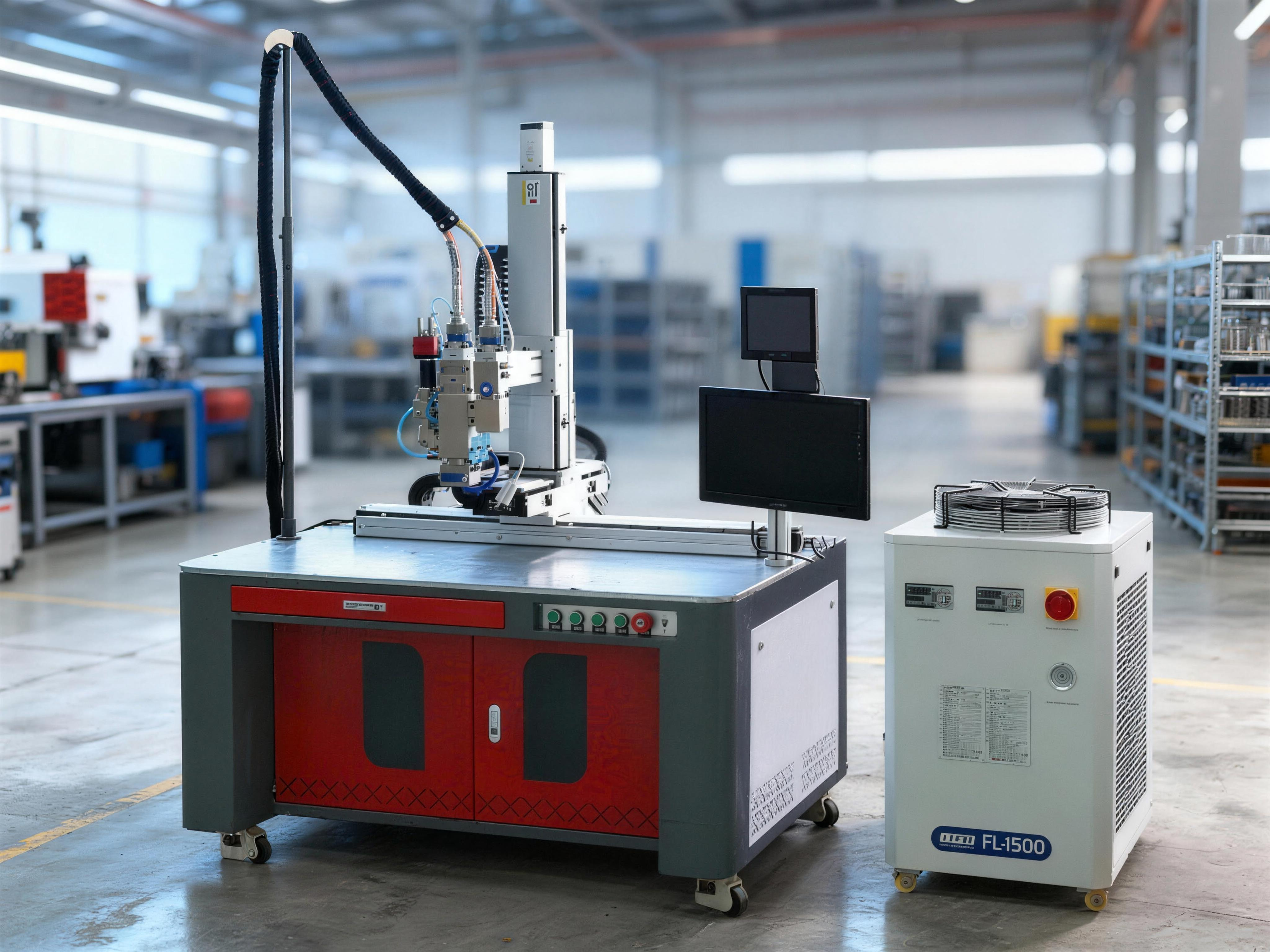
A cnc laser welding machine is an advanced welding system that uses a high-energy laser beam controlled by a CNC system to join metal materials.
The CNC system controls:
- Welding path
- Speed
- Position
- Depth
This automation ensures that every weld is consistent and repeatable, even in high-volume production environments.
Compared to manual welding, a cnc-controlled system offers greater precision and efficiency.
How a CNC Laser Welding Machine Works
The working process combines digital control with laser technology:
- A CAD design defines the welding path
- The CNC system converts the design into machine instructions
- The laser beam is generated and transmitted
- The beam is focused onto the material
- The material melts and forms a weld
- The weld solidifies into a strong joint
Because the entire process is programmed, human error is significantly reduced.
Key Features of CNC Laser Welding Machines
Fully Automated Operation
A cnc laser welding machine operates with minimal manual input.
- Pre-programmed welding paths
- Consistent production
- Reduced operator dependency
Multi-Axis Precision Control
Most systems support:
- X, Y, Z axis movement
- Optional rotary or multi-axis configurations
This allows welding of:
- Complex geometries
- 3D components
- Irregular structures
High Repeatability
Consistency is one of the biggest advantages.
- Identical welds across batches
- Stable production quality
Continuous Production Capability
These machines are designed for:
- Long working hours
- High-volume manufacturing
- Industrial production lines
Clean and Strong Weld Quality
Laser welding produces:
- Smooth weld seams
- Minimal spatter
- Reduced deformation
Advantages of CNC Laser Welding Machines
Increased Production Efficiency
A cnc laser welding machine can significantly reduce production time.
- Faster welding speed
- Higher output
Reduced Labor Costs
Automation reduces the need for skilled welders.
Improved Product Quality
- Consistent weld strength
- Lower defect rates
Minimal Heat Distortion
- Smaller heat-affected zone
- Better dimensional accuracy
Capability for Complex Designs
CNC control allows precise welding paths that are difficult to achieve manually.
Applications of CNC Laser Welding Machines
Sheet Metal Fabrication
- Cabinets
- Enclosures
- Structural components
Automotive Industry
- Body parts
- Battery housings
- Precision assemblies
Electronics Manufacturing
- Connectors
- Sensors
- Small metal parts
Aerospace Industry
- Lightweight structures
- High-strength components
Metal Product Manufacturing
- Aluminum structures
- Stainless steel products
CNC Laser Welding vs Manual Welding
CNC Laser Welding Machine
- Automated
- High precision
- Suitable for mass production
- Consistent results
Manual Welding
- Flexible
- Lower initial cost
- Requires skilled labor
Key Insight
A cnc laser welding machine is ideal when:
- Production volume is high
- Product consistency is critical
- Complex weld paths are required
CNC Laser Welding Machine Price
Typical Price Range
- Entry-level systems: $8,000 – $12,000
- Mid-range systems: $15,000 – $30,000
- Advanced industrial systems: $50,000+
Factors Affecting Price
The cost of a cnc laser welding machine depends on:
- Laser power
- CNC system complexity
- Number of axes
- Automation level
- Software features
Cost vs Long-Term Value
Although the initial investment may be higher, a cnc-controlled system provides long-term savings through:
- Reduced labor costs
- Increased efficiency
- Lower defect rates
How to Choose the Right CNC Laser Welding Machine
Determine Production Requirements
- Production volume
- Material type
- Welding complexity
Select the Right Axis Configuration
- 3-axis → simple applications
- Multi-axis → complex geometries
Evaluate Software Capability
- Easy programming
- CAD/CAM compatibility
Focus on Stability and Reliability
A stable cnc laser welding machine ensures:
- Consistent results
- Reduced downtime
- Long-term performance
Consider After-Sales Support
Reliable suppliers should offer:
- Technical support
- Spare parts
- Training services
Common Mistakes When Buying
Choosing Based Only on Price
Lower-cost machines may compromise quality and performance.
Ignoring Automation Needs
Manual systems cannot meet large-scale production demands.
Overlooking Software Importance
Software directly affects usability and flexibility.
Selecting Incorrect Configuration
Improper setup leads to inefficiency.
Why CNC Integration Is a Game-Changer
CNC technology allows welding processes to be fully automated and precisely controlled.
With a cnc laser welding machine, manufacturers can achieve:
- Repeatable precision
- Consistent quality
- Reduced human error
This is essential for scaling production while maintaining high standards.
Business Benefits for Manufacturers
Adopting a cnc laser welding machine can help factories:
- Increase production speed
- Reduce labor costs
- Improve product quality
- Minimize material waste
This leads to stronger competitiveness and higher profitability.
Opportunities for Distributors
The demand for automated welding systems is growing rapidly.
Advantages:
- Expanding global market
- Strong profit potential
- Repeat customer opportunities
Target Customers:
- Industrial manufacturers
- Metal fabrication factories
- Automotive suppliers
Future Trends in CNC Laser Welding
Smart Manufacturing
- AI-assisted welding
- Real-time monitoring
Robotic Integration
- Fully automated production lines
Multi-Function Systems
- Welding + cutting + cleaning
Increased Efficiency
- Lower energy consumption
- Higher productivity
Conclusion
The cnc laser welding machine represents a major step forward in welding technology.
By combining automation with laser precision, it enables manufacturers to achieve:
- Higher efficiency
- Better quality
- Lower long-term costs
For companies aiming to scale production and maintain consistency, investing in a CNC-based system is not just a technological upgrade—it is a strategic decision.