How to Choose the Right Laser Welding Machine Supplier in 2026: Complete Industrial Buying Guide
News 2026-03-04
Introduction: Why Choosing the Right Laser Welding Machine Supplier Matters
In today’s competitive manufacturing environment, investing in advanced equipment is no longer just about performance specifications. It is about reliability, service support, scalability, and long-term partnership. When it comes to industrial metal fabrication, selecting the right laser welding machine supplier can determine whether your investment drives growth — or creates operational headaches.
Laser welding technology has become essential in sheet metal fabrication, automotive manufacturing, kitchen equipment production, precision engineering, and many other industries. However, the market is filled with different suppliers offering a wide range of laser welding systems, making it difficult for buyers to evaluate which partner is truly reliable.
This comprehensive guide is designed to help customers understand:
- What a professional laser welding machine supplier should provide
- How laser welding systems differ
- Typical price ranges and cost considerations
- How to assess technical support and after-sales service
- Key factors that ensure long-term stability and return on investment
By the end of this article, you will have a clear framework for choosing a laser welding equipment supplier that supports your production goals and future growth.
Understanding the Role of a Laser Welding Machine Supplier
A laser welding machine supplier does far more than sell equipment. A true supplier provides complete laser welding solutions tailored to specific production needs.
Equipment Provider vs Solution Partner
There is a major difference between simply purchasing a machine and forming a strategic partnership.
A professional laser welding equipment supplier should offer:
- Consultation based on application requirements
- Equipment customization options
- Installation guidance
- Operator training
- After-sales support
- Spare parts availability
- Long-term technical assistance
Your supplier should understand your industry, materials, and workflow — not just the product catalog.
Overview of Modern Laser Welding Systems
Before selecting a supplier, buyers must understand the common types of laser welding systems available today.
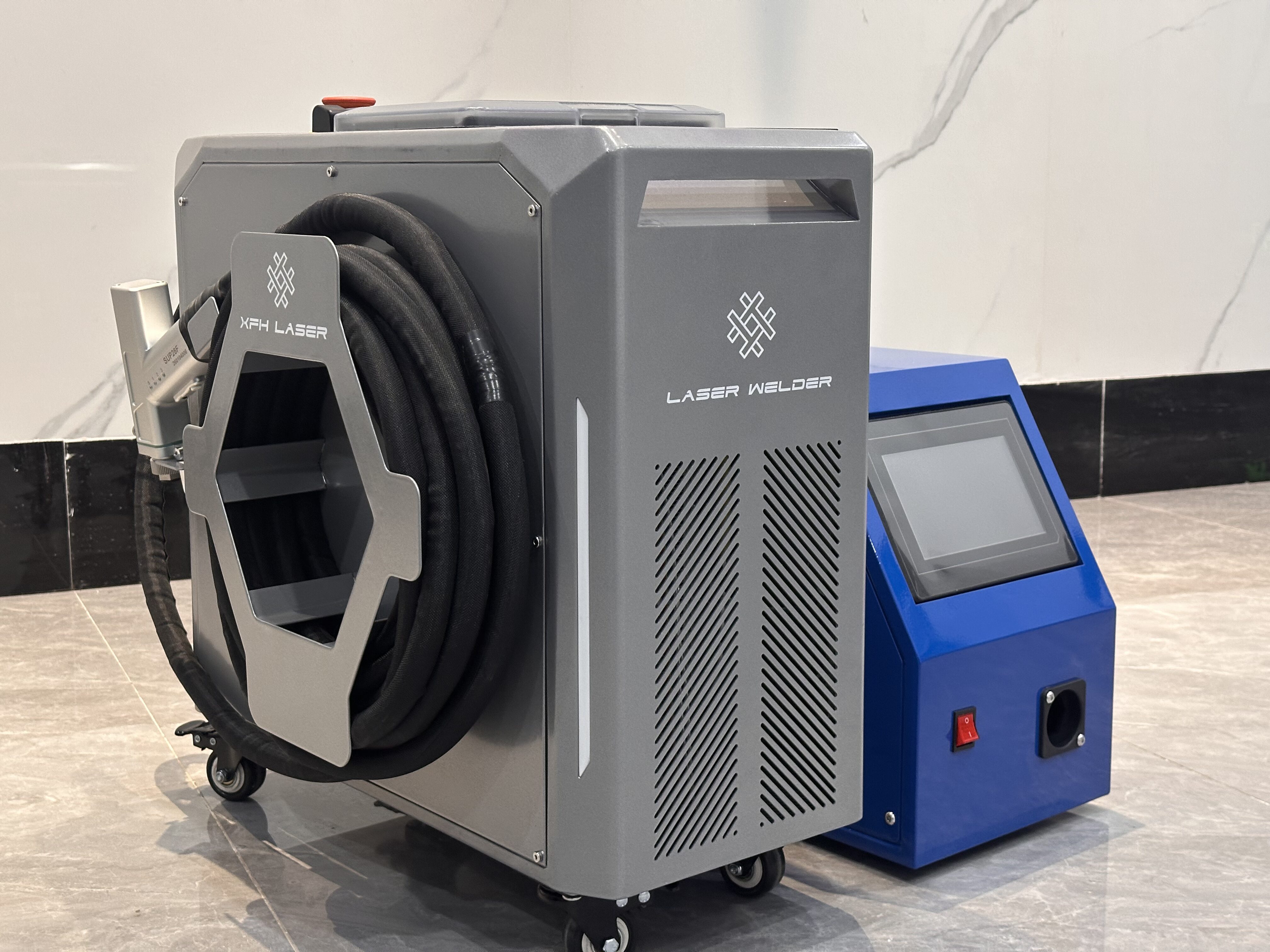
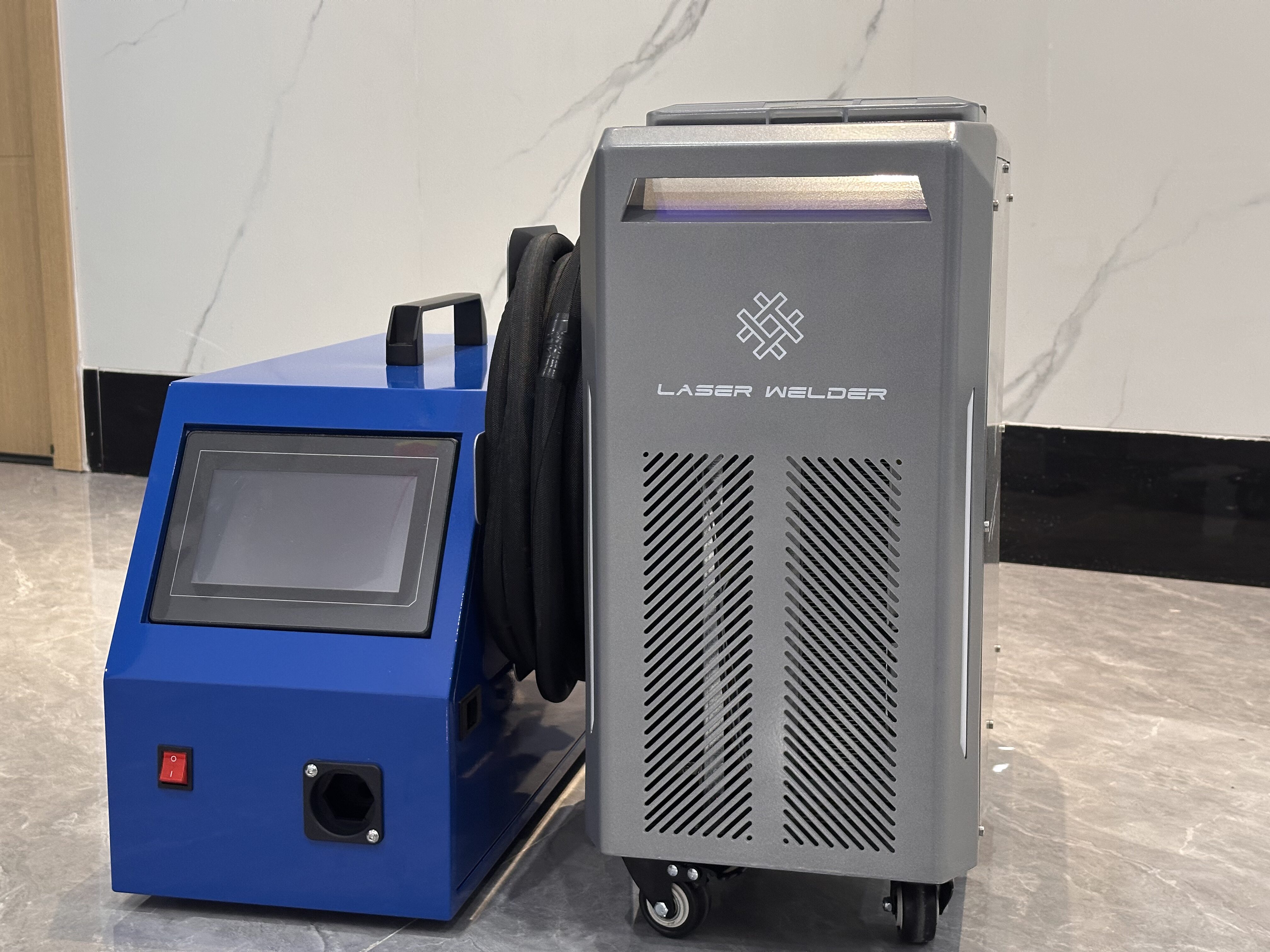
Fiber Laser Welding Machines (Most Widely Used)
Fiber laser welding systems dominate the global industrial market due to their high efficiency and stability.
Why fiber lasers are popular:
- Excellent beam quality
- High electrical efficiency
- Low maintenance
- Compact design
- Strong compatibility with automation
These machines are widely used in:
- Sheet metal fabrication
- Stainless steel products
- Aluminum component production
- Door and window manufacturing
- Automotive parts
- Kitchen equipment manufacturing
A reputable laser welding machine supplier will typically offer multiple power levels within fiber laser systems, such as 1000W, 1500W, 2000W, and higher industrial configurations.
Pulsed Precision Laser Systems
For industries requiring extremely fine weld control — such as medical devices or electronics — pulsed laser welding systems are commonly used.
Advantages include:
- Minimal heat input
- High precision
- Controlled energy delivery
These systems are generally lower in power but higher in control accuracy.
Automated and Robotic Laser Welding Systems
Advanced suppliers may provide automated laser welding systems designed for high-volume production.
These systems include:
- Robotic integration
- Motion control platforms
- Real-time monitoring software
- Programmable welding parameters
Automation improves repeatability and significantly reduces labor dependency.
Key Factors When Choosing a Laser Welding Machine Supplier
Selecting the right laser welding machine supplier requires a structured evaluation process.
1. Equipment Stability and Quality
The most important factor in industrial laser welding is stability.
Ask:
- Does the supplier use high-quality laser sources?
- Are cooling systems properly engineered?
- Is the output power consistent over long duty cycles?
- Are optical components durable and protected?
Stable laser welding systems reduce downtime and ensure consistent weld quality.
2. Technical Support and After-Sales Service
Even the best laser welding machine may require technical assistance.
A professional laser welding equipment supplier should provide:
- Remote diagnostics support
- Fast response time
- Clear troubleshooting guidance
- Spare parts supply
- Warranty coverage
Downtime can be extremely costly. Responsive support protects your production schedule.
3. Customization and Application Expertise
Different industries have different welding requirements.
For example:
- Sheet metal factories require low distortion and clean seams.
- Door and window manufacturers need precise aluminum frame welding.
- Kitchen equipment producers require hygienic stainless steel welds.
Your laser welding machine supplier should understand these application differences and recommend appropriate configurations.
4. Price Transparency and Total Cost of Ownership
Laser welding machine price varies widely depending on:
- Power output
- Cooling system (air-cooled or water-cooled)
- Automation features
- Software integration
- Warranty terms
Typical price ranges:
- Entry-level fiber laser welding systems: $3,000–$6,000
- Mid-range industrial systems: $4,000–$8,000
- Automated robotic systems: $10,000+
However, price alone should not determine your decision. Consider total cost of ownership, including:
- Energy consumption
- Maintenance
- Consumables
- Training
- Production efficiency gains
Cooling Systems: A Key Differentiator Among Suppliers
Cooling design significantly affects machine performance.
Air-Cooled Laser Welding Machines
Advantages:
- Compact design
- Easy installation
- Energy-saving and low operating costs
- No maintenance required, just turn it on and use it.
Limitations:
- Only within 2000 watts
- The initial investment is slightly higher.
Water-Cooled Laser Welding Machines
Advantages:
- Superior heat dissipation
- Stable performance during long operation
- Suitable for higher power systems
- Low initial investment
Limitations:
- Requires chiller maintenance
- Susceptible to high and low temperatures
A reliable laser welding machine supplier will clearly explain which cooling method best suits your application.
How the Right Supplier Solves Real Production Problems
Case 1: Sheet Metal Fabrication Factory
Problem:
- Frequent distortion using traditional welding
- High rework rate
- Inconsistent weld quality
Solution:
The supplier recommended a mid-power fiber laser welding system with optimized parameter settings and water cooling for continuous operation.
Results:
- Reduced distortion
- Faster welding speeds
- Lower scrap rate
- Improved delivery performance
Case 2: Door and Window Manufacturer
Problem:
- Thin aluminum frames warped during welding
- Excessive finishing work required
Solution:
The laser welding equipment supplier configured precise parameter control and provided training for aluminum welding.
Results:
- Clean weld seams
- Minimal deformation
- Reduced polishing time
- Increased production capacity
Red Flags When Evaluating a Laser Welding Machine Supplier
Be cautious if a supplier:
- Cannot clearly explain system specifications
- Offers no after-sales support
- Has limited spare parts availability
- Provides vague warranty terms
- Avoids application-specific discussions
Professional laser welding systems require professional support.
Long-Term Partnership vs One-Time Purchase
Choosing a laser welding machine supplier should be viewed as a long-term strategic decision.
A strong supplier relationship offers:
- Ongoing process optimization
- Equipment upgrades
- Production scaling support
- Continuous training
Your supplier should grow with your business.
Industry Trends in Laser Welding Supply
The laser welding industry continues to evolve.
Increased Adoption by SMEs
Smaller workshops are adopting fiber laser welding systems due to decreasing costs and improved user-friendliness.
Integration With Automation
Suppliers increasingly provide robotic integration and smart control software.
Greater Focus on Stability
Modern buyers prioritize stable output and long-term reliability over raw power numbers.
Questions to Ask Before Finalizing Your Supplier
- What industries do you primarily serve?
- What types of laser welding systems do you offer?
- What cooling methods are available?
- How do you ensure machine stability?
- What technical support is included?
- How quickly can you supply spare parts?
- Do you offer training services?
- What is your warranty coverage?
- Can the system be upgraded in the future?
- What ROI can I realistically expect?
Conclusion: Selecting the Right Laser Welding Machine Supplier
Choosing a professional laser welding machine supplier is critical to maximizing your production efficiency and protecting your investment.
The right supplier provides:
- Stable and reliable laser welding systems
- Clear pricing structure
- Responsive technical support
- Industry-specific expertise
- Long-term partnership commitment
Laser welding technology offers tremendous advantages in speed, precision, and cost savings — but only when supported by a dependable supplier.
By carefully evaluating equipment quality, cooling systems, service responsiveness, and application knowledge, manufacturers can select a laser welding equipment supplier that not only delivers machines — but delivers long-term business growth.