How to Choose a Laser Welder?
FAQ 2021-07-13
How to Choose the Right Laser Welder Based on Material Thickness and Application
Choosing the right laser welder is a critical decision for manufacturers, fabricators, and workshops aiming to improve welding quality and production efficiency. Unlike traditional welding methods, laser welding offers higher precision, faster speeds, and cleaner weld seams—but only when the equipment is properly matched to the application. Among all selection criteria, material thickness and usage scenario are the two most important factors that directly influence performance, cost, and long-term reliability.
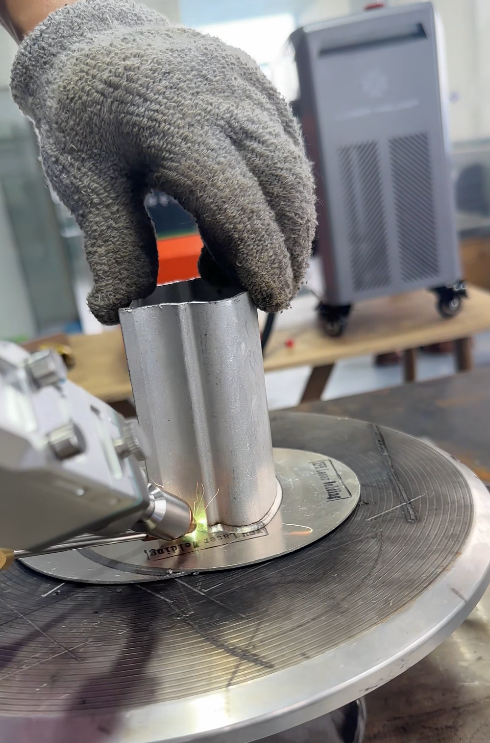
1. What is the most important factor when choosing a laser welder?
The most important factors when selecting a laser welder are material thickness and welding scenario. Material thickness determines the required laser power to achieve sufficient penetration and joint strength, while the usage scenario defines the machine configuration—such as handheld, workstation-based, or fully automated systems.
Ignoring either factor can result in poor weld quality, low efficiency, or unnecessary investment. A well-matched laser welder ensures consistent welds, minimal heat-affected zones, and stable long-term operation.
2. How does material thickness affect laser welder selection?
Laser power must be carefully matched to the thickness of the material being welded. Insufficient power leads to shallow penetration and weak joints, while excessive power can cause burn-through, distortion, or poor surface appearance.
General guidelines include:
-
0.5–3 mm thickness: Low to medium power laser welders are ideal for thin sheet metal, decorative components, and precision parts. These applications benefit from controlled heat input and smooth weld seams.
-
3–6 mm thickness: Medium power laser welders are commonly used for general metal fabrication, frames, brackets, and industrial components where strength and efficiency are both important.
-
6 mm and above: High-power laser welders are recommended for structural parts, thick plates, and heavy-duty welding tasks that require deeper penetration and strong joints.
Choosing the correct power range improves weld consistency and reduces post-weld processing.
3. Can one laser welder handle different thicknesses?
Yes, most modern laser welders feature adjustable power settings, allowing them to handle a range of material thicknesses. Operators can fine-tune laser power, welding speed, and focus position to suit different applications.
However, it is important to select the base laser power according to the most common thickness used in daily production. While a higher-power system can be adjusted downward, selecting a machine that is underpowered for your primary application will limit productivity and weld quality.
4. How does the welding scenario influence the choice?
The working environment and production method play a major role in laser welder selection:
-
Handheld laser welding: Ideal for flexible jobs, on-site repairs, small-batch production, and irregular workpieces. Handheld systems offer excellent maneuverability and are well suited for workshops and maintenance tasks.
-
Workshop or production welding: Suitable for repetitive welding of standardized parts with consistent thickness. These systems often use fixtures or workstations to improve accuracy and efficiency.
-
Industrial or heavy-duty welding: Requires higher laser power, stable cooling systems, and often automated or robotic solutions to support continuous operation and high throughput.
Matching the machine configuration to the application improves efficiency and operator comfort.
5. Does material type matter in addition to thickness?
Yes. Material type has a significant impact on laser welding performance. Stainless steel and carbon steel are relatively easy to weld and respond well to laser energy. In contrast, aluminum and copper reflect more laser energy and conduct heat rapidly, often requiring higher power or optimized parameters, even at the same thickness.
Understanding material properties helps ensure proper parameter selection and consistent welding results.
6. Is higher laser power always better?
No. While higher laser power increases penetration capability, it also raises equipment cost and the risk of overheating thin materials. Excessive power can lead to burn-through, excessive spatter, and poor surface finish.
The best choice is a laser welder that matches your actual thickness range and application needs, rather than simply selecting the highest wattage available.
7. What other features should I consider?
In addition to laser power, consider factors such as cooling system stability, welding head control, safety features, ease of operation, and suitability for continuous or intermittent use. These features directly affect reliability, productivity, and long-term operating cost.
Summary
To choose the right laser welder, start by identifying your material thickness range, then match it with your welding scenario and production requirements. A properly selected laser welder delivers stable penetration, clean weld seams, and high efficiency—without unnecessary cost or complexity.