1. What is the first thing to consider when choosing a laser cleaning machine?
Start by identifying your cleaning needs: the type of material (metal, plastic, rubber), the kind of contaminants (rust, paint, oil), and the size of surfaces you will clean most often. Matching machine specs to these requirements is essential for effective cleaning.
2. How does laser power affect the choice ?
Laser power determines how fast and effectively contaminants are removed:
- Low power (20–200W): Suitable for delicate surfaces, light rust, thin paint, or precision tasks.
- Medium power (200–500W): Ideal for general cleaning of rust, grease, and paint on moderate-sized parts.
- High power (500W+): Best for heavy-duty cleaning on thick coatings and large surfaces in industrial environments.
Choose the lowest power that safely handles your hardest cleaning task to avoid surface damage and excessive cost.
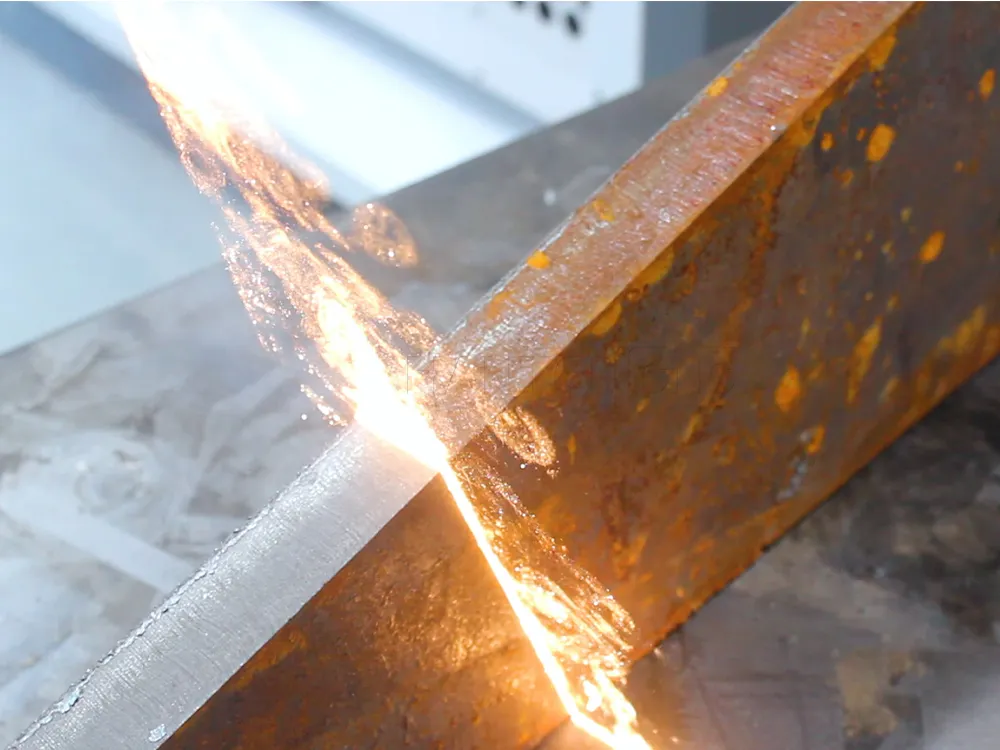
3. Should I choose handheld or stationary?
Handheld machines are great for flexible on-site cleaning, repairs, and variable workpieces. Stationary units or automated systems suit high-volume production, assembly lines, or fixed cleaning stations.
4. Is wavelength important?
Yes. The laser wavelength affects how well energy is absorbed by the material:
Matching wavelength to material improves cleaning efficiency and reduces heat damage.
5. What about pulse type and frequency?
Laser cleaners can operate in pulsed or continuous modes:
-
Pulsed lasers: Deliver bursts of energy, reducing heat impact — ideal for precision cleaning and sensitive surfaces.
-
Continuous wave lasers: Provide steady output, useful for bulk contaminant removal where thermal impact is less critical.
Pulse frequency and duration influence how aggressively contaminants are removed without harming the substrate.
6. How does production volume influence my choice?
Always consider how much cleaning your operation requires over time.
7. What safety and support features should I look for?
Ensure the machine has proper safety measures (interlocks, shielding), cooling systems to manage heat, and quality support from the supplier for training, maintenance, and repairs. Good safety design and after-sales service reduce risk and downtime.
8. Do I need to consider long-term costs?
Yes — look beyond the purchase price. Factor in operational costs like energy consumption, maintenance, consumables (filters, optics), and downtime costs. A machine that is inexpensive upfront but costly to maintain can reduce overall value.
9. Is testing important before buying?
Absolutely. Testing with your materials and contaminant types helps verify cleaning speed, power sufficiency, and surface impact. This practical step prevents mismatches between specifications and real-world performance.
10. What’s the best way to balance performance and cost?
Choose a machine that meets your heaviest cleaning need without over-specifying. For most general industrial tasks, a mid-range power laser cleaner (200–500W) balances cost, flexibility, and capability. For specialized tasks, adjust power, configuration, and automation accordingly.
Final Thoughts
Choosing the right laser cleaning machine is not only about comparing technical specifications—it’s about selecting a solution that truly matches your cleaning application, production environment, and long-term operational goals. A well-selected laser cleaning machine can significantly improve cleaning efficiency, protect the base material, and reduce manual labor and maintenance costs over time.
Before purchasing a laser cleaning machine, carefully evaluate how it will be used in real production. Consider whether your cleaning tasks are occasional or continuous, whether you need a handheld laser cleaning machine for mobility, or a stationary laser cleaning machine for fixed workstations. Surface quality requirements, cleaning speed, and repeatability should all influence your final decision.
It is also important to work with a supplier that can provide application testing, technical guidance, and reliable after-sales support. A stable laser cleaning machine with proper training and service support ensures consistent performance and minimizes downtime.
By balancing laser power, configuration, safety features, and total ownership cost, you can choose a laser cleaning machine that delivers both performance and value. The right laser cleaning machine will not only solve current cleaning challenges but also support future production expansion and evolving industrial cleaning needs.