🟦 Handheld vs. Automatic Laser Welding: Which Is Right for Your Production Line?
News 2026-05-22
📑 Table of Contents
- Introduction
- What Is Handheld Laser Welding?
- What Is Automatic Laser Welding?
- Key Differences Between Handheld and Automatic Laser Welding
- Advantages of Handheld Laser Welding
- Advantages of Automatic Laser Welding
- Which Industries Prefer Handheld Welding?
- Which Industries Need Automatic Laser Welding?
- Cost Comparison and ROI Analysis
- How to Choose the Right Solution for Your Production Line
- Future Trends in Laser Welding Automation
- Conclusion
1. Introduction
Laser welding technology has rapidly transformed modern manufacturing. From stainless steel fabrication to EV battery production, laser systems are replacing traditional TIG and MIG welding due to their speed, precision, and lower heat distortion.
Today, manufacturers mainly choose between two solutions:
Each technology serves different production goals. Some factories prioritize flexibility and lower investment costs, while others require fully automated high-speed production lines.
So which one is right for your business?
This guide compares Handheld vs. Automatic Laser Welding from the perspective of production efficiency, labor costs, scalability, automation, and long-term return on investment.
🔹 2. What Is Handheld Laser Welding?
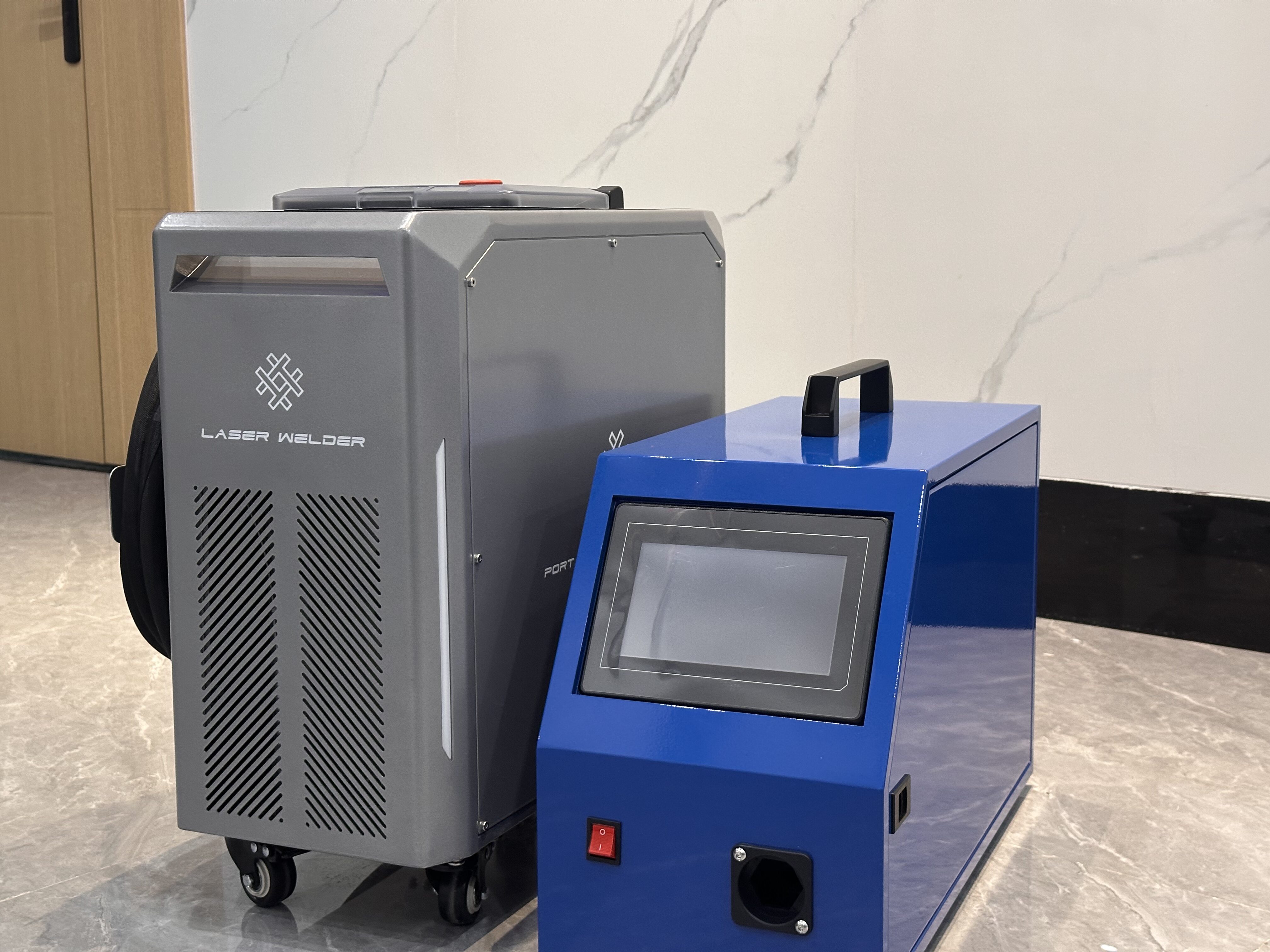
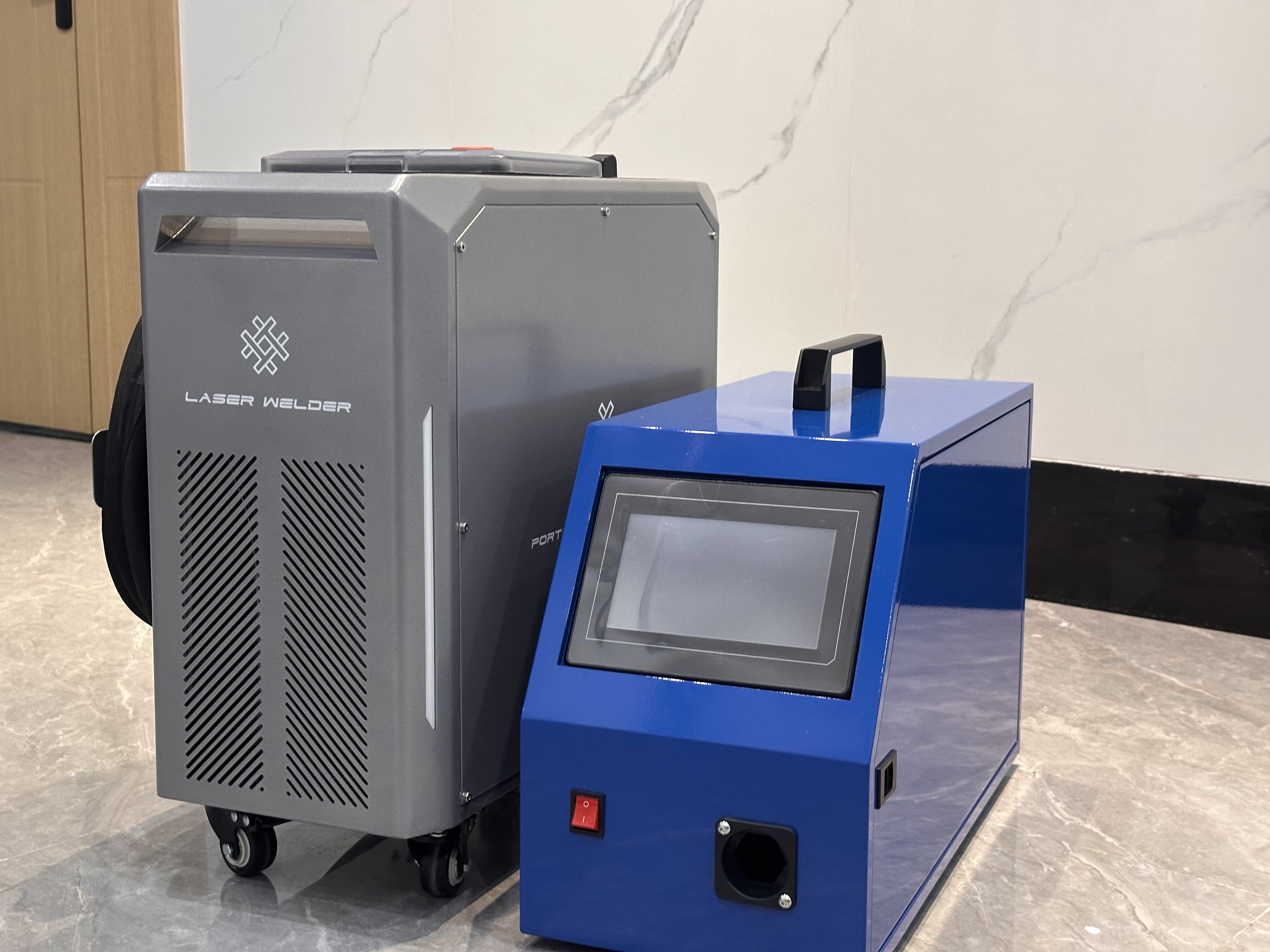
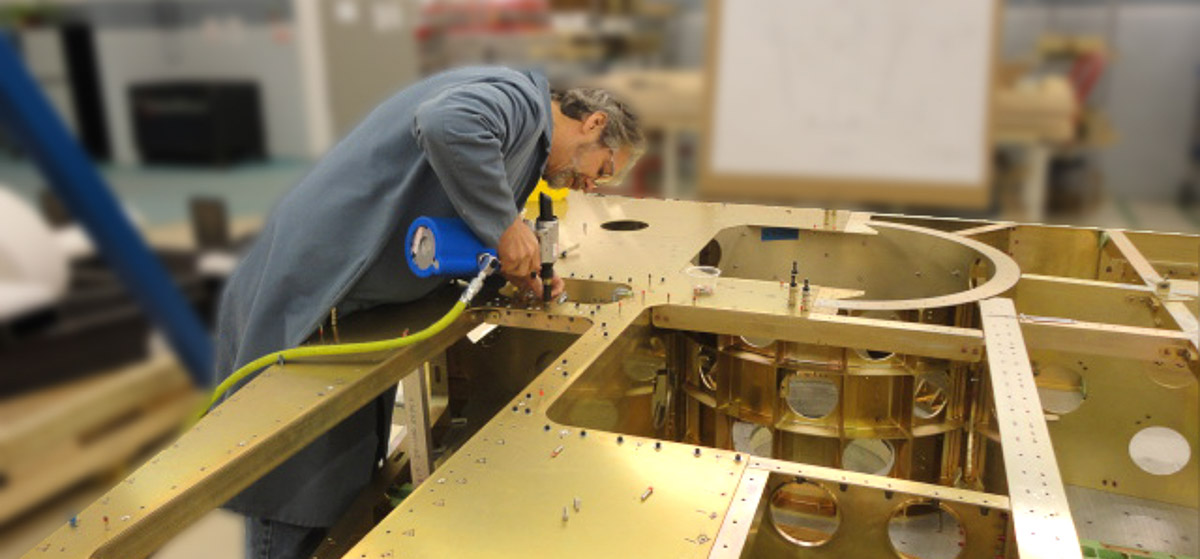
A handheld laser welding machine is a portable fiber laser system operated manually by an operator using a handheld welding gun.
Unlike traditional fixed welding platforms, handheld systems provide greater flexibility and mobility for welding large or irregular workpieces. They are especially popular among small and medium-sized fabrication workshops.
Key Features
- Portable and compact design
- Easy operation with short learning curve
- Suitable for stainless steel, carbon steel, aluminum
- Minimal weld deformation
- Flexible welding angles and positions
- Lower equipment investment
Modern handheld systems often include:
- Wobble welding heads
- Wire feeders
- Air or water cooling systems
- 3-in-1 functions (welding, cleaning, cutting)
🔹 3. What Is Automatic Laser Welding?
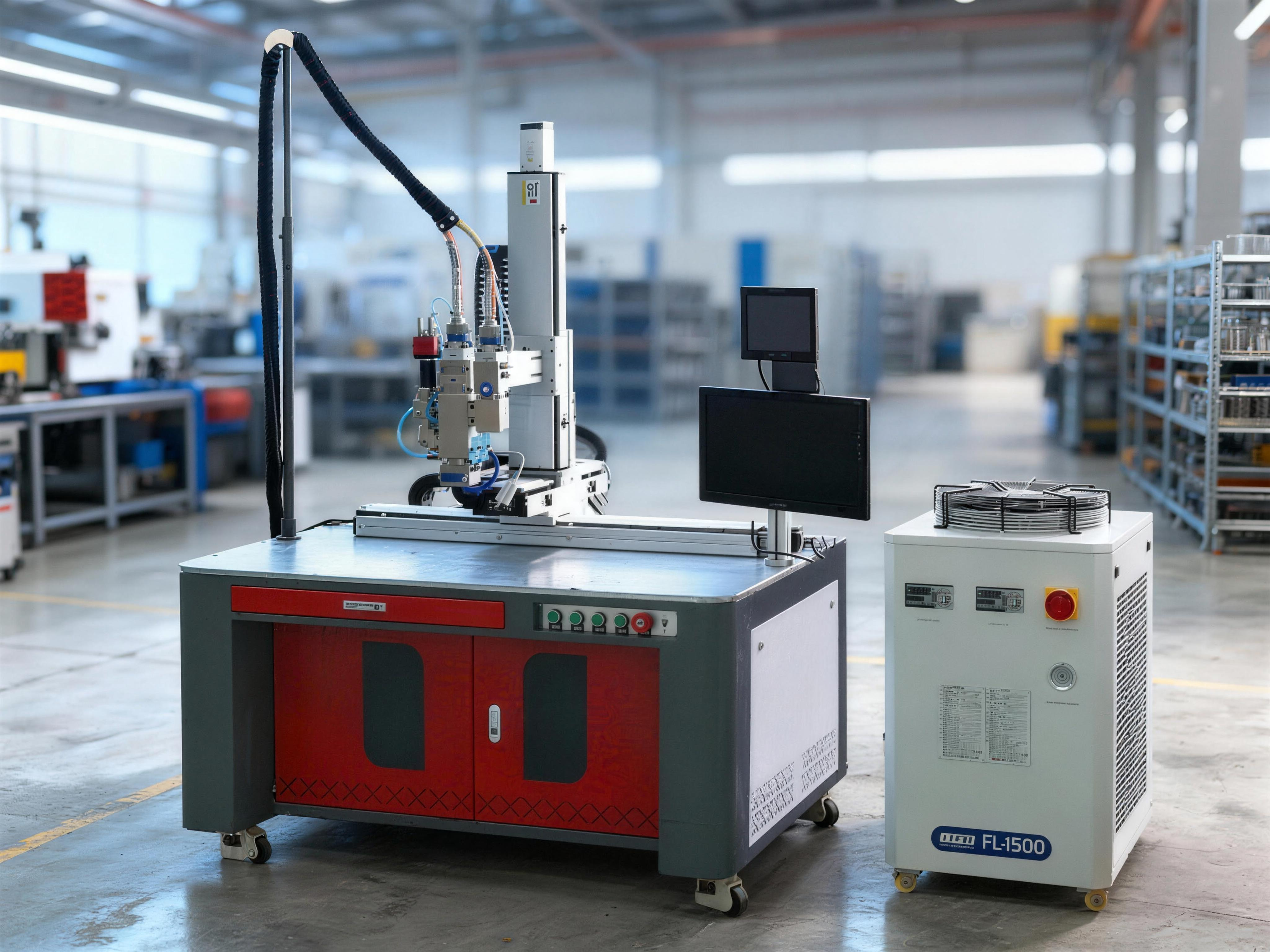
An automatic laser welding machine is an industrial welding system integrated with robotics, CNC motion platforms, sensors, and intelligent software control.
Instead of manual operation, the welding process is fully programmed and automated for consistent high-volume production.
Typical Components
- Fiber laser source
- Robotic arm or gantry system
- Seam tracking system
- CNC control software
- Vision monitoring cameras
- Conveyor or rotary stations
- Automatic positioning modules
Automatic systems are widely used in:
- Automotive manufacturing
- Battery production
- Aerospace components
- Electronics manufacturing
- Precision industrial assembly
⚖️ 4. Key Differences Between Handheld and Automatic Laser Welding
| Feature | Handheld Laser Welding | Automatic Laser Welding |
|---|---|---|
| Operation | Manual | Fully automated |
| Flexibility | Very high | Moderate |
| Production Speed | Medium | Extremely high |
| Consistency | Depends on operator | Highly repeatable |
| Initial Cost | Lower | Higher |
| Labor Requirement | Operator needed | Minimal labor |
| Best for | Small batch & custom work | Mass production |
| Automation Integration | Limited | Advanced |
| Setup Time | Very short | Longer programming/setup |
| ROI Speed | Faster for small shops | Faster for factories |
Automatic systems deliver much higher consistency and throughput, while handheld systems excel in flexibility and lower startup costs.
🔥 5. Advantages of Handheld Laser Welding
5.1 High Flexibility
Handheld welding allows operators to weld large structures, corners, irregular shapes, and hard-to-reach areas easily.
5.2 Lower Investment Cost
Compared with robotic systems, handheld laser welding machines require significantly lower capital investment.
This makes them ideal for:
- Small workshops
- Job shops
- Metal fabrication businesses
- Repair services
5.3 Easy to Learn
Modern handheld systems simplify operation compared to TIG welding. Many operators can learn basic welding within a short period.
5.4 Reduced Heat Distortion
Laser welding creates a smaller heat-affected zone, reducing deformation and post-processing.
5.5 Portable Applications
Portable laser welding systems are suitable for:
- Door and window fabrication
- Kitchen equipment manufacturing
- Stainless steel furniture
- Outdoor maintenance work
🚀 6. Advantages of Automatic Laser Welding
6.1 High-Speed Production
Automatic laser welding systems are designed for continuous industrial operation and mass production environments.
6.2 Excellent Repeatability
Robotic motion systems ensure identical weld quality across thousands of parts.
6.3 Reduced Labor Costs
Automation minimizes operator dependence and helps manufacturers reduce labor costs long-term.
6.4 Intelligent Monitoring
Advanced systems now include:
- Seam tracking
- Real-time monitoring
- AI quality control
- Vision systems
- Adaptive welding correction
These technologies improve welding precision and reduce defects.
6.5 Easy Production Line Integration
Automatic laser welding systems can integrate with:
- Robotic assembly lines
- MES systems
- ERP manufacturing software
- Conveyor automation
🏭 7. Which Industries Prefer Handheld Welding?
Handheld laser welding is commonly used in industries requiring flexibility and customization:
- Sheet metal fabrication
- Stainless steel products
- Kitchenware manufacturing
- Advertising signs
- Furniture production
- Auto repair shops
- Small-batch manufacturing
For businesses producing different products daily, handheld systems offer better operational adaptability.
🏗️ 8. Which Industries Need Automatic Laser Welding?
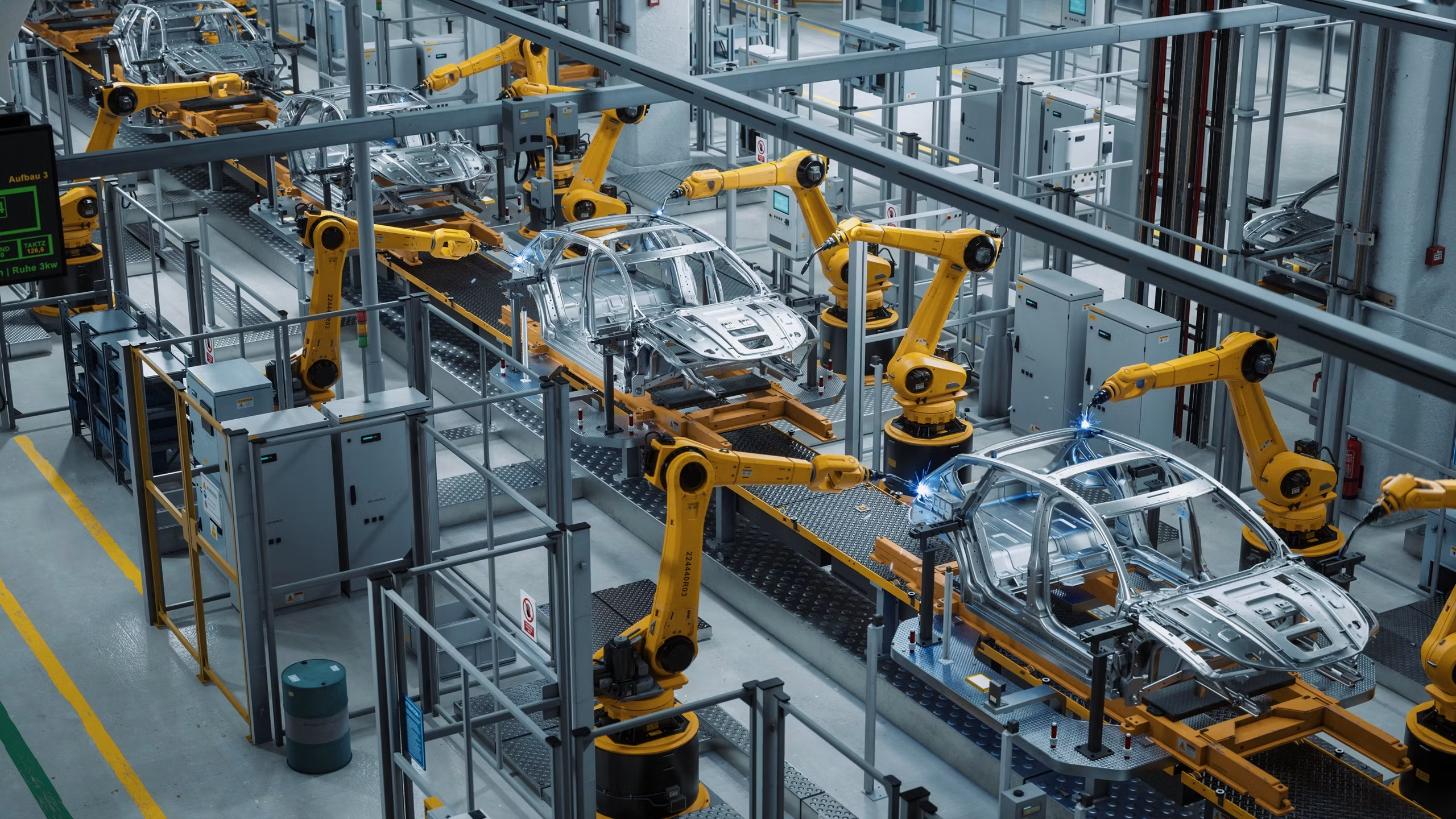
Automatic laser welding is preferred in high-volume industrial environments:
- Automotive production lines
- EV battery manufacturing
- Aerospace components
- Medical devices
- Electronics manufacturing
- Precision machinery
Factories requiring 24/7 production and consistent weld quality usually benefit more from automatic systems.
💰 9. Cost Comparison and ROI Analysis
Handheld Laser Welding
Lower Initial Investment
Typical handheld systems cost significantly less than robotic laser welding cells.
Faster ROI for Small Businesses
Shops with lower production volumes can achieve ROI quickly due to:
- Labor savings
- Faster welding speed
- Reduced grinding and polishing
Automatic Laser Welding
Higher Initial Investment
Automatic systems require:
- Robots
- Fixtures
- Programming
- Safety enclosures
- Motion systems
Strong Long-Term ROI
For mass production environments, automation dramatically increases:
- Throughput
- Consistency
- Production scalability
Over time, lower defect rates and reduced labor costs offset the higher initial investment.
🧠 10. How to Choose the Right Solution for Your Production Line
Choose Handheld Laser Welding if:
- You produce custom products
- Production volume is moderate
- Flexibility is critical
- Budget is limited
- You need portability
Choose Automatic Laser Welding if:
- You run mass production lines
- Product dimensions are standardized
- You require consistent weld quality
- Labor reduction is a priority
- Factory automation is a long-term strategy
🔮 11. Future Trends in Laser Welding Automation
The laser welding industry is rapidly evolving toward intelligent manufacturing.
Future developments include:
- AI-based weld quality analysis
- Real-time adaptive seam tracking
- Smart robotic welding cells
- IoT-connected laser systems
- Collaborative robot (cobot) welding
- Fully digital production management
Automation and smart manufacturing are expected to become the standard in large-scale industrial production.
🟩 12. Conclusion
Both handheld and automatic laser welding systems offer major advantages depending on production requirements.
Handheld laser welding provides:
- Flexibility
- Lower investment
- Easy operation
- Excellent portability
Automatic laser welding delivers:
- High-speed mass production
- Superior consistency
- Intelligent automation
- Long-term industrial scalability
The best solution depends on your production volume, product type, labor structure, and long-term manufacturing goals.
As laser welding technology continues evolving, both handheld and automated systems will play essential roles in the future of industrial manufacturing.