Handheld Portable Welder: The Complete Buyer’s Guide (2026)
News 2026-06-30
Published: June 30, 2026
Author: XFH LASER Engineering Team
Table of Contents
- Introduction
- What Is a Handheld Portable Welder?
- Why Portable Laser Welders Are Always Air-Cooled
- Air-Cooled vs Water-Cooled Laser Welders
- How Air Cooling Technology Works
- Choosing the Right Laser Power (700W–2000W)
- What Materials Can a Handheld Portable Welder Weld?
- How to Choose the Best Handheld Portable Welder for Your Business
- Key Features to Consider Before Buying
- Common Buying Mistakes
- How Much Does a Handheld Portable Welder Cost?
- Frequently Asked Questions
- Why Choose XFH Laser?
- Final Thoughts
1.Introduction
Laser welding has changed the way manufacturers join metal. Compared with traditional MIG and TIG welding, a handheld portable welder offers higher speed, cleaner welds, and much less post-processing.
Today, more workshops are replacing conventional welding machines with portable laser welders. They are easier to learn, produce better-looking welds, and improve overall productivity.
However, not every portable welding machine is the same. Power, cooling system, laser source, and component quality all affect performance, operating costs, and long-term reliability.
This guide explains everything you need to know before buying a handheld portable welder in 2026. Whether you own a fabrication shop, run a manufacturing factory, or plan to become a distributor, this guide will help you choose the right machine.
2.What Is a Handheld Portable Welder?
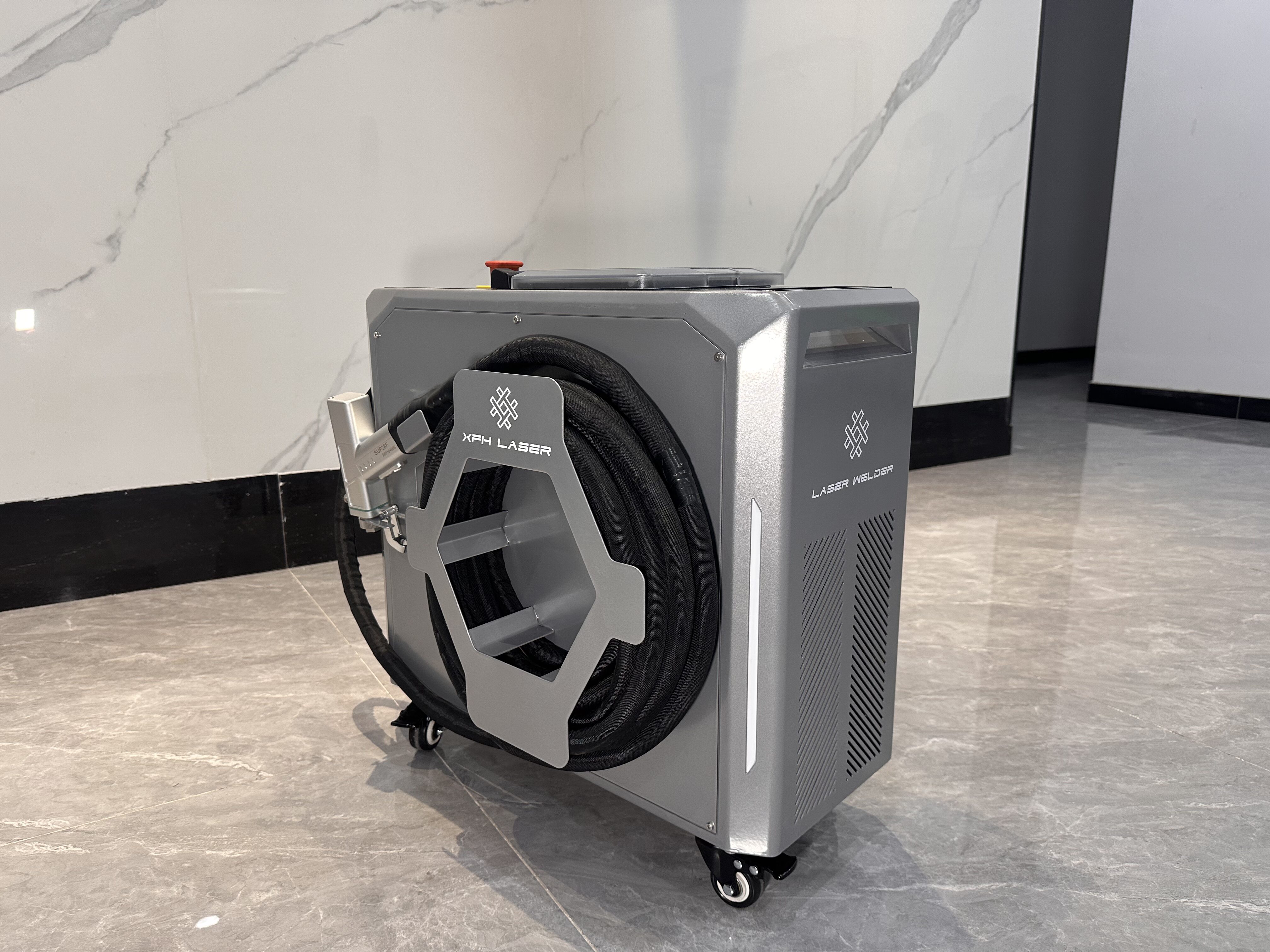
A handheld portable welder is a compact fiber laser welding machine designed for manual welding. Unlike large industrial systems, it is lightweight, easy to move, and can be used almost anywhere with a suitable power supply.
Most portable laser welders are used for welding:
- Stainless steel
- Carbon steel
- Aluminum
- Galvanized steel
- Brass
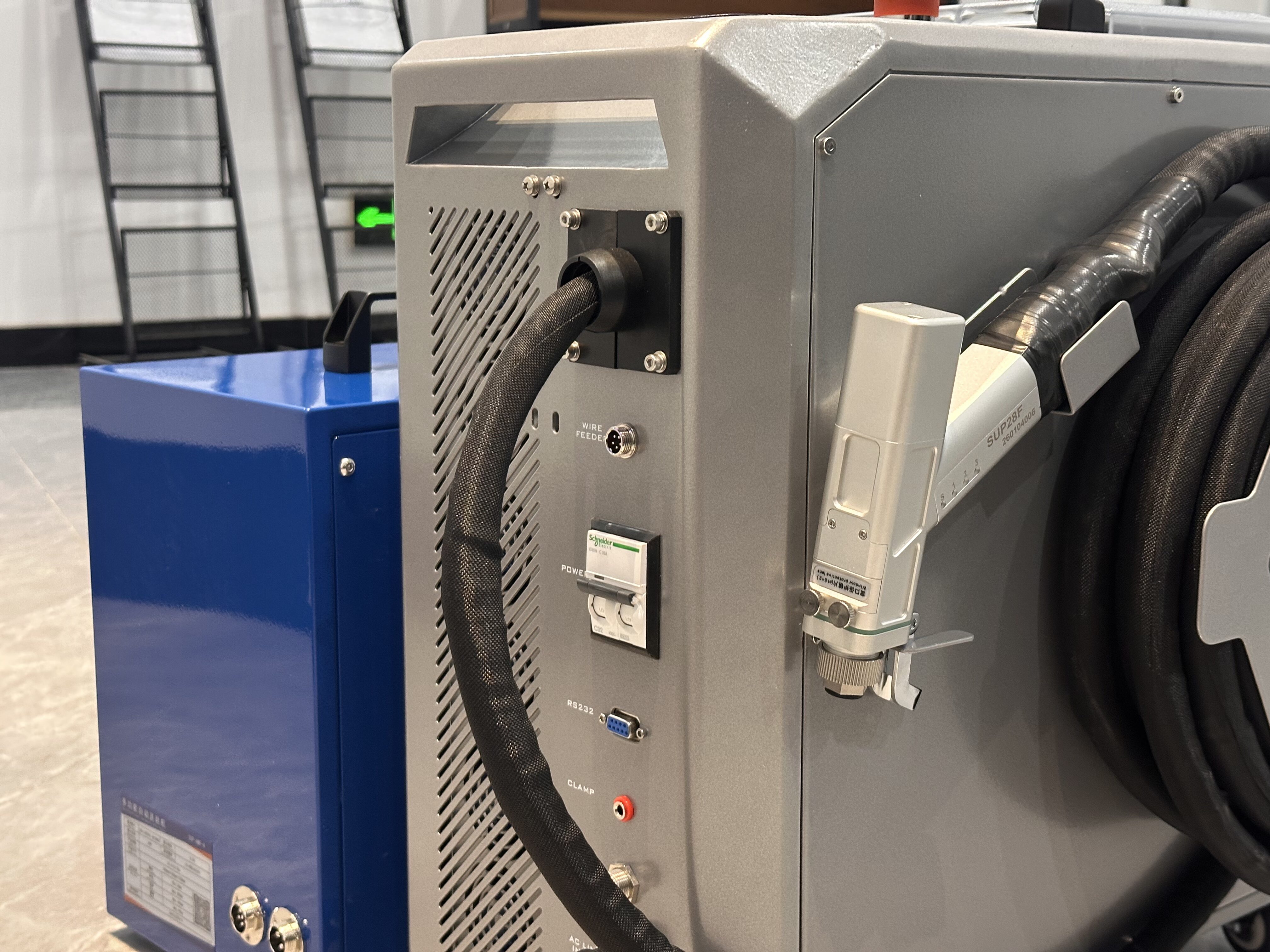
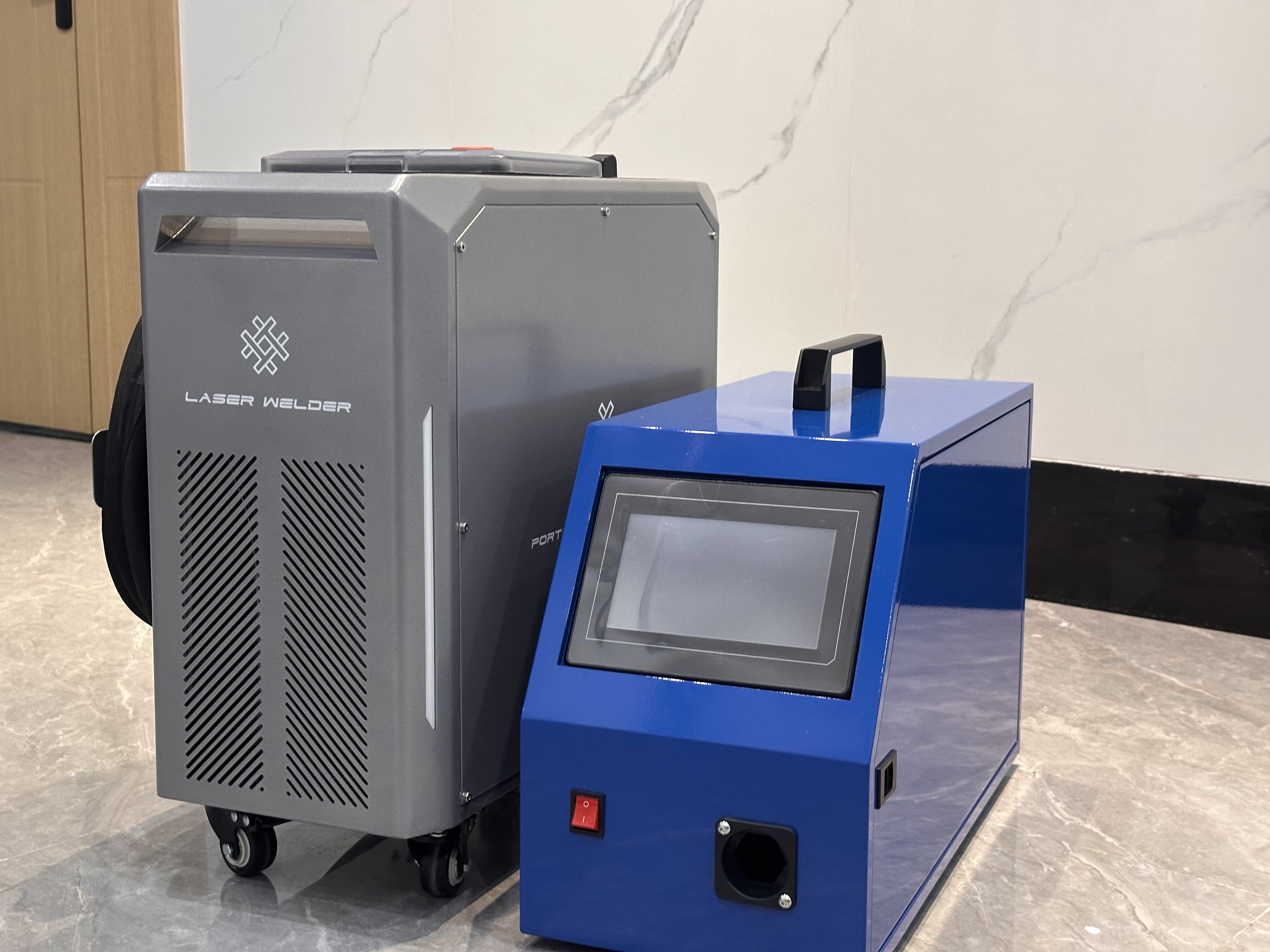
A typical handheld laser welding machine consists of several key components:
- Fiber laser source
- Air-cooled welding gun
- Intelligent control system
- Touchscreen interface
- Wire feeder (optional)
- Protective safety system
Together, these components create a welding system that is both efficient and easy to operate.
Why More Manufacturers Are Choosing Portable Laser Welders
Manufacturers are under constant pressure to reduce labor costs while improving production efficiency.
Traditional TIG welding requires experienced operators and usually needs grinding or polishing after welding. This increases production time and labor expenses.
A portable laser welder greatly simplifies the process.
Its focused laser beam creates a narrow heat-affected zone, resulting in cleaner welds with less distortion and minimal finishing work.
Many operators can learn the basic welding process within a few days instead of several months.
For many companies, higher efficiency quickly offsets the initial investment.
Main Advantages of a Handheld Portable Welder
Compared with traditional welding equipment, a handheld laser welding machine offers several advantages.
Faster Welding Speed
Laser welding can be several times faster than TIG welding, especially for thin stainless steel and sheet metal fabrication.
Higher speed means more finished products every day.
Better Weld Appearance
Laser welding produces smooth and uniform weld seams.
In many applications, additional grinding or polishing is greatly reduced.
Lower Heat Input
The laser concentrates energy into a very small area.
This minimizes deformation and helps protect thin materials from excessive heat.
Easy Operation
Modern laser welders use intuitive touchscreens and preset welding parameters.
Even new operators can achieve consistent weld quality after short training.
Lower Long-Term Labor Cost
Less training, faster production, and reduced post-processing all contribute to lower manufacturing costs.
3.Why Portable Laser Welders Are Always Air-Cooled
Many buyers assume that all laser welding machines are portable.
This is actually a common misunderstanding.
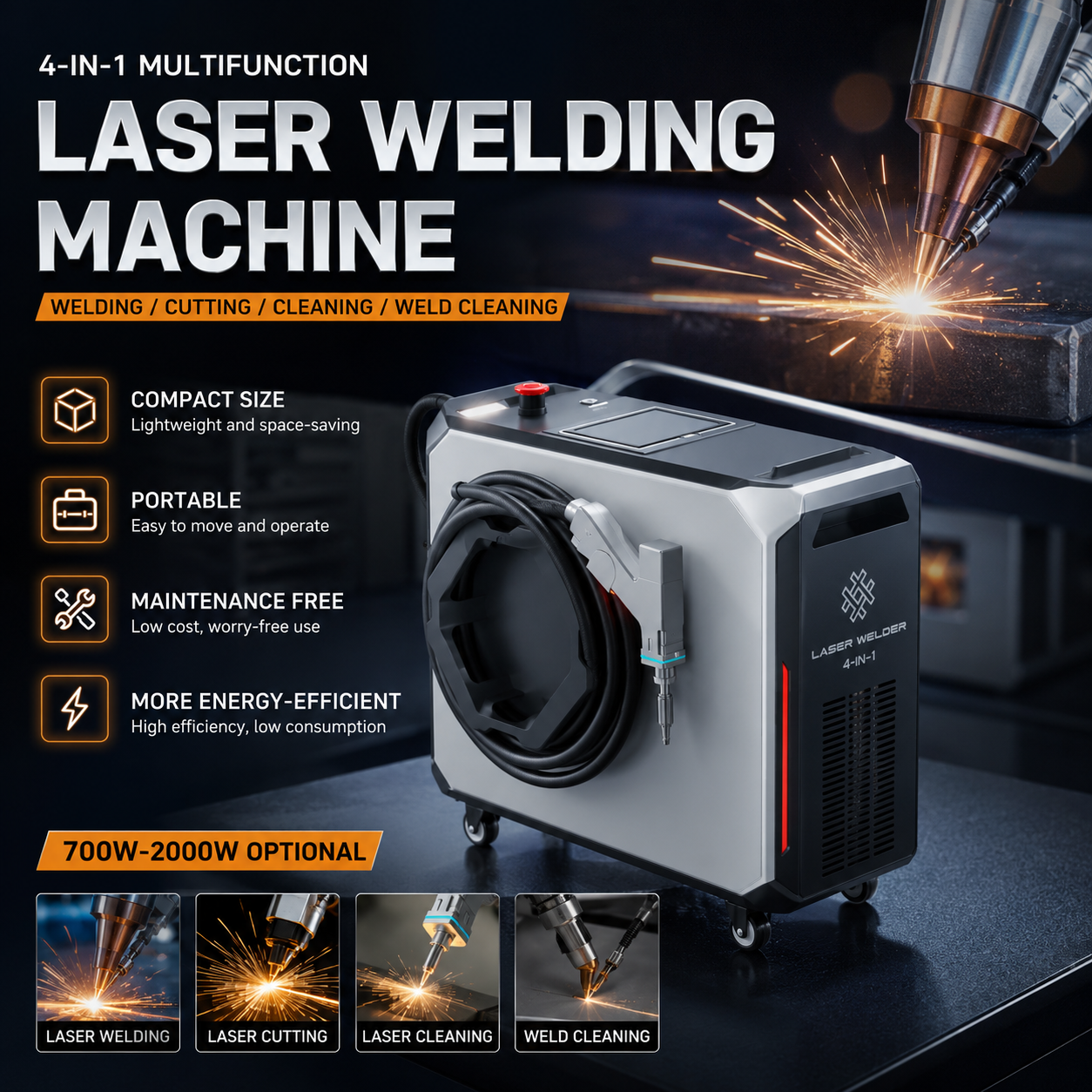
A true handheld portable welder is almost always an air-cooled laser welder.
The reason is simple.
Portability depends on size and weight.
A water-cooled laser welding machine requires several additional components:
- Water tank
- Water pump
- Compressor or refrigeration unit
- Cooling pipes
- Coolant
These components significantly increase the overall size and weight of the machine.
Once they are added, the equipment is no longer truly portable.
An air-cooled laser welder removes all of these components.
Instead, it uses specially designed air-cooled technology to dissipate heat efficiently.
This allows the entire machine to become much smaller, lighter, and easier to transport.
For users who frequently move between workstations or job sites, this difference is significant.
Why Air-Cooled Machines Are More Energy Efficient
Without a water circulation system, the machine consumes less electricity.
There is no water pump continuously running.
There is no compressor consuming additional power.
There is no cooling water to maintain.
This not only reduces daily operating costs but also simplifies machine maintenance.
For small businesses and mobile welding services, lower power consumption can make a noticeable difference over time.
Do Air-Cooled Laser Welders Overheat?
One of the most common questions from buyers is whether an air-cooled machine can handle continuous work.
The answer is yes—provided it is designed correctly.
A professional handheld portable welder should not use standard industrial components intended for water-cooled systems.
Instead, it should be equipped with:
- A dedicated air-cooled laser source
- A dedicated air-cooled welding gun
- An optimized airflow design
- Intelligent temperature monitoring and protection
These components work together to maintain stable operating temperatures during normal production.
Proven Reliability in Real-World Environments
At XFH Laser, our air-cooled handheld laser welders have been tested in the global market for more than four years.
Customers are successfully using our machines across North America, Europe, Africa, Southeast Asia, and the Middle East.
They continue to operate reliably in both hot and cold climates.
Unlike water-cooled systems, there is no risk of frozen coolant during winter.
There is also no concern about high water temperatures, coolant replacement, water pump failures, or leaking pipes.
For many users, this greatly reduces maintenance time and unexpected downtime.
4.Air-Cooled vs Water-Cooled Laser Welders
Choosing between an air-cooled and a water-cooled laser welder depends on your production requirements.
Both technologies have their advantages, but they are designed for different applications.
| Feature | Air-Cooled Handheld Portable Welder | Water-Cooled Laser Welder |
|---|---|---|
| Portability | Excellent | Limited |
| Machine Size | Compact | Larger |
| Weight | Lightweight | Heavy |
| Cooling Method | Air | Water circulation |
| Water Required | No | Yes |
| Daily Maintenance | Very Low | Higher |
| Energy Consumption | Lower | Higher |
| Installation | Simple | More complex |
| Mobility | Easy | Difficult |
| Maximum Power | Up to 2000W | Up to 3000W and above |
Which One Is Right for You?
If your work requires frequent movement, flexible installation, or on-site welding, an air-cooled handheld portable welder is usually the better choice.
It is lighter, requires almost no daily maintenance, and eliminates the need for water management.
If your production line welds thick materials continuously for long periods and requires power above 2000W, a water-cooled laser welding machine may be more suitable.
The right choice depends on your actual production needs rather than simply choosing the highest power available.
5. How Air Cooling Technology Works
Many people believe that air-cooled laser welders cannot dissipate heat as effectively as water-cooled machines.
This is one of the biggest misconceptions in the laser welding industry.
Modern handheld portable welders are not simply water-cooled machines with the water tank removed. They are engineered from the ground up as complete air-cooled systems.
Every major component is specifically designed to work together.
Dedicated Air-Cooled Laser Source
The laser source is the heart of the machine.
An air-cooled laser source uses optimized thermal management to maintain a stable operating temperature without requiring water circulation.
This design reduces the number of components while improving portability.
Dedicated Air-Cooled Welding Gun
The welding gun also plays an important role.
Unlike traditional water-cooled welding guns, an air-cooled welding gun has a lighter structure and optimized airflow.
This makes it easier to handle during long working hours while maintaining stable welding performance.
Intelligent Temperature Protection
Professional portable laser welders continuously monitor internal temperatures.
If abnormal temperatures are detected, the control system automatically adjusts operating conditions to protect key components.
This helps extend machine life and improve reliability.
Built for Real Production
XFH Laser has supplied air-cooled handheld laser welders to customers worldwide for more than four years.
Our machines operate successfully in hot regions such as Africa and the Middle East, as well as colder environments across Europe and North America.
Customers do not need to worry about frozen coolant, leaking water pipes, or damaged water pumps because the machine does not use water at all.
For businesses looking for a reliable portable laser welder, this greatly reduces maintenance requirements throughout the year.
6. Choosing the Right Laser Power (700W–2000W)
Choosing the right power is more important than choosing the highest power.
A machine that is too powerful may increase your investment without improving productivity.
A machine with insufficient power may struggle to complete your welding tasks efficiently.
The best choice depends on your material type, thickness, and daily production volume.
700W Handheld Portable Welder
Recommended Thickness: Up to 2 mm
The 700W model is the smallest and lightest option in the XFH Laser portable series.
It is ideal for:
- Home workshops
- Small repair shops
- Stainless steel products
- Thin sheet metal
- Advertising signs
If you are searching for the smallest welder for light-duty metal fabrication, a 700W air-cooled laser welder is an excellent choice.
1200W Handheld Portable Welder
Recommended Thickness: Up to 3 mm
The 1200W model offers an excellent balance between speed and versatility.
It is suitable for:
- Metal furniture
- Kitchen equipment
- Elevator decoration
- Stainless steel fabrication
- Sheet metal workshops
Many small manufacturers choose this model because it provides strong performance while remaining lightweight and portable.
1500W Handheld Portable Welder
Recommended Thickness: Up to 4 mm
The 1500W model is one of the most popular choices worldwide.
It can handle most daily welding applications with ease.
Recommended industries include:
- Door and window manufacturing
- Cabinet production
- Metal fabrication
- Mechanical equipment
- Agricultural machinery
For many factories, this is the ideal balance between power, efficiency, and investment.
2000W Handheld Portable Welder
Recommended Thickness: Up to 6 mm
The 2000W model is the highest-power air-cooled handheld laser welder currently available from XFH Laser.
It is designed for customers who require:
- Faster welding speeds
- Longer daily operating hours
- Thicker materials
- Higher production capacity
Although water-cooled machines can offer higher power levels, many manufacturers find that a 2000W air-cooled machine already meets more than 90% of their daily welding requirements.
Power Selection Guide
| Laser Power | Maximum Recommended Thickness | Typical Applications |
|---|---|---|
| 700W | Up to 2 mm | Repair work, signage, light fabrication |
| 1200W | Up to 3 mm | Sheet metal, kitchen equipment, furniture |
| 1500W | Up to 4 mm | General manufacturing, doors, cabinets |
| 2000W | Up to 6 mm | Industrial fabrication, machinery, heavy-duty production |
The best handheld portable welder is not necessarily the one with the highest power. It is the one that matches your production needs.
7. What Materials Can a Handheld Portable Welder Weld?
One of the biggest advantages of fiber laser welding is its versatility.
A single machine can weld multiple types of metal with excellent results.
Stainless Steel
Stainless steel is one of the easiest materials to weld with a handheld laser welder.
Laser welding creates smooth, clean welds with very little discoloration.
Minimal polishing is usually required after welding.
Carbon Steel
Carbon steel is widely used in industrial manufacturing.
A portable laser welder provides deep penetration, high strength, and excellent welding efficiency.
Aluminum
Aluminum reflects laser energy more than steel.
However, with proper parameter settings and operator experience, aluminum can be welded successfully.
For thicker aluminum, filler wire is often recommended to improve weld quality.
Galvanized Steel
Laser welding reduces heat input, helping minimize damage to the zinc coating.
Proper ventilation should always be used when welding galvanized materials.
Brass
Brass can also be welded using a handheld laser welding machine.
Because brass has high thermal conductivity, selecting the correct power and welding speed is important.
Can It Weld Copper?
Copper is one of the most challenging materials because of its high reflectivity and excellent heat conductivity.
Modern fiber laser technology has greatly improved copper welding performance, but higher power and optimized parameters are generally required.
Professional testing is recommended before large-scale production.
8. How to Choose the Best Handheld Portable Welder for Your Business
Every business has different production needs.
Choosing the right machine starts with understanding your daily work.
For Repair Shops
A compact 700W or 1200W machine is usually sufficient.
It is lightweight, easy to transport, and simple to operate.
For Sheet Metal Fabrication
Most sheet metal manufacturers choose 1200W or 1500W models.
These machines provide excellent welding quality while maintaining high productivity.
For Stainless Steel Products
Restaurants, kitchens, and furniture manufacturers often benefit from 1500W air-cooled laser welders because they deliver smooth, attractive welds with minimal finishing.
For Heavy Industrial Production
If your work regularly involves materials up to 6 mm thick, a 2000W handheld portable welder is the recommended choice.
It offers faster welding speeds while maintaining the portability advantages of an air-cooled design.
For Distributors
Distributors often prefer offering multiple power options to meet different customer needs.
The 700W, 1200W, 1500W, and 2000W series together cover most common welding applications, making them an attractive product lineup for local markets.
9. Key Features to Consider Before Buying
Choosing the right handheld portable welder is about more than comparing prices. A high-quality machine should deliver stable performance, low maintenance costs, and reliable long-term operation.
Here are the most important factors to consider before making your investment.
Laser Source
The laser source is the most valuable component of the machine.
A high-quality laser source provides:
- Stable output power
- Longer service life
- Better welding consistency
- Lower maintenance costs
A reliable laser source also helps maintain consistent weld quality during continuous operation.
Air-Cooled System
A true portable laser welder should use a complete air-cooled design.
There is no water tank.
There is no water pump.
There is no compressor.
This makes the machine:
- Smaller
- Lighter
- Easier to transport
- Easier to maintain
- More energy efficient
For mobile welding and small workshops, these advantages can significantly improve daily productivity.
Welding Gun
The welding gun directly affects operator comfort.
Look for a lightweight design with a comfortable grip.
A well-balanced welding gun reduces fatigue during long working hours and improves welding accuracy.
Dedicated air-cooled welding guns are generally lighter than water-cooled models because they do not require internal cooling channels.
User-Friendly Software
Modern laser welders should be easy to operate.
A clear touchscreen interface allows operators to quickly switch between different materials and thicknesses.
Preset welding parameters also reduce setup time and improve consistency.
Safety Features
Laser welding equipment should always include multiple safety protections.
Important features include:
- Emergency stop button
- Safety lock
- Protective grounding
- Temperature monitoring
- Fault alarm system
These functions help protect both the operator and the machine.
After-Sales Support
Excellent after-sales service is just as important as machine quality.
Before purchasing, ask the supplier:
- Do they provide online technical support?
- Are training videos available?
- Can spare parts be supplied quickly?
- How long is the warranty?
- Is remote troubleshooting available?
Reliable support can save valuable production time if problems occur.
10. Common Buying Mistakes
Many buyers focus only on the purchase price.
However, the lowest-priced machine is not always the best investment.
Avoid these common mistakes before placing your order.
Mistake 1: Choosing the Cheapest Machine
Low-cost machines often use lower-quality components.
While the initial investment may be lower, maintenance costs can increase over time.
Stable performance is usually more valuable than a small difference in purchase price.
Mistake 2: Buying More Power Than You Need
Many customers believe that higher power is always better.
In reality, choosing excessive power increases both equipment costs and energy consumption.
For example:
If your maximum welding thickness is only 3 mm, a 1200W model may already meet your production needs.
Selecting the correct power is usually more economical than simply buying the largest machine available.
Mistake 3: Ignoring Machine Weight
Some machines are advertised as portable but are still difficult to move.
A genuine handheld portable welder should be compact enough for flexible use inside the workshop.
Lower weight makes transportation easier and improves operator convenience.
Mistake 4: Ignoring Operating Costs
Purchase price is only part of the total investment.
You should also consider:
- Electricity consumption
- Maintenance costs
- Downtime
- Spare parts
- Operator training
A reliable machine often delivers a lower total cost of ownership.
Mistake 5: Choosing a Supplier Without Technical Support
Every machine requires service during its lifetime.
Choosing an experienced manufacturer with professional technical support can reduce downtime and improve production efficiency.
Always evaluate the supplier—not just the machine.
11. How Much Does a Handheld Portable Welder Cost?
The price of a handheld portable welder depends on several factors.
These include:
- Laser power
- Laser source
- Welding gun
- Control system
- Accessories
- Warranty
- Technical support
Generally, higher-quality components increase the purchase price but also improve reliability and service life.
When comparing quotations, avoid focusing only on the lowest number.
Instead, compare the complete value of the machine.
A slightly higher-quality machine can reduce maintenance costs and improve productivity over many years.
Is an Air-Cooled Laser Welder More Expensive?
Yes.
For the same output power, an air-cooled laser welder is often more expensive than a water-cooled model.
This surprises many buyers.
The reason is that air-cooled systems require specially designed components.
The dedicated air-cooled laser source and dedicated air-cooled welding gun are more complex to manufacture.
Although the purchase price is higher, users save money through:
- Lower electricity consumption
- No cooling water
- No water pump maintenance
- No coolant replacement
- Reduced maintenance time
Many customers find that these long-term savings offset the higher initial investment.
12. Frequently Asked Questions
Is a handheld portable welder suitable for beginners?
Yes.
Most operators can learn basic welding techniques after short training.
The touchscreen interface and preset parameters make operation much easier than traditional TIG welding.
What is the difference between a handheld portable welder and a mini laser welder?
In most cases, they refer to similar compact laser welding machines.
The term mini laser welder usually emphasizes the machine’s small size, while handheld portable welder highlights its mobility and manual operation.
What is a micro laser welder?
A micro laser welder is typically used for high-precision industries such as jewelry, electronics, medical devices, and precision components.
It is different from industrial handheld laser welders used for sheet metal fabrication and general manufacturing.
What is the smallest welder available?
The smallest welder depends on the welding technology.
For industrial fiber laser welding, air-cooled handheld laser welders are among the most compact solutions because they do not require water-cooling systems.
Does an air-cooled laser welder require water?
No.
Air-cooled laser welders operate without water tanks, pumps, or coolant.
This simplifies maintenance and eliminates many common cooling-related issues.
Can it weld aluminum?
Yes.
With proper parameter settings and operator experience, aluminum can be welded successfully.
Filler wire is recommended for some applications.
How long does the laser source last?
A high-quality fiber laser source is designed for long service life under normal operating conditions.
Routine maintenance and proper operation help maximize its lifespan.
Can it work in hot or cold environments?
Yes.
Professional air-cooled laser welders are designed to operate across a wide range of ambient temperatures.
XFH Laser machines have been successfully used by customers in North America, Europe, Africa, Southeast Asia, and the Middle East.
13. Why Choose XFH Laser?
At XFH Laser, we focus on building practical and reliable laser welding solutions for manufacturers around the world.
Our air-cooled handheld laser welders have been continuously improved through years of real-world customer feedback.
We understand that reliability is more important than simply offering the lowest price.
Our portable laser welders are designed to help customers improve productivity while reducing maintenance and operating costs.
Why Manufacturers Choose XFH Laser
- Complete air-cooled design
- No water tank or water pump
- Lightweight and compact structure
- Lower power consumption
- Dedicated air-cooled laser source
- Dedicated air-cooled welding gun
- 700W, 1200W, 1500W and 2000W models available
- Up to 6 mm welding capacity
- Professional technical support
- Global customer base across more than four years of market validation
Whether you are purchasing your first machine or expanding your production line, our engineering team can help you select the most suitable solution for your business.
14. Final Thoughts
A handheld portable welder is more than a compact welding machine.
It is a practical solution for improving productivity, reducing labor costs, and achieving consistent welding quality.
When selecting a machine, focus on your actual production requirements rather than simply choosing the highest power or the lowest price.
For most manufacturers, an air-cooled handheld laser welder offers the ideal balance of portability, reliability, energy efficiency, and ease of maintenance.
By choosing the right power level and working with an experienced supplier, you can maximize your return on investment for years to come.